••
President Mahama’s Education Reset Drives Infrastructure Expansion from Basic Schools to Specialized Universities
•3 min read•10 sources
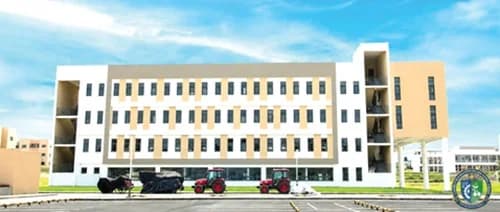
Ghana’s educational landscape is undergoing a significant transformation as the government and private partners accelerate infrastructure projects to address critical shortages and modernize learning. At the forefront of this shift is the establishment of the University of Engineering and Agricultural Sciences (UEAS) in Bunso, Eastern Region. Scheduled to commence operations for the 2026/2027 academic year, UEAS is Africa’s first institution designed specifically to merge engineering with agricultural disciplines to tackle food security and industrialization. Developed with a $92 million loan from the Korean Exim Bank, the university aims to produce industry-ready graduates. Simultaneously, the University of Cape Coast (UCC) has secured a landmark $500 million student housing deal with GSC Property Investment Limited to construct 28 dormitory blocks, providing 28,000 beds under a 30-year Build-Operate-Transfer model. Education Minister Haruna Iddrisu emphasized that these projects align with President John Mahama’s "education reset agenda," focusing on self-sustaining models that do not require state guarantees.
While high-level institutional projects advance, the government is also moving to eliminate dire conditions in basic education across the country. In the Ashanti Region, students at Bosomponso Junior High School have finally transitioned from an abandoned pigsty into a modern three-unit classroom block commissioned by Regional Minister Dr. Frank Amoakohene. A similar milestone was reached in Akwamu-Aboasa, where a new JHS facility ended a 120-year gap in local access to secondary education. In the Kwahu Afram Plains North District, work has begun on a modern kindergarten block at the Donkorkrom Islamic School, with District Chief Executive Kate Mawusi Babanawo affirming the government's commitment to early childhood education environments. However, challenges remain acute in areas like the Atebubu-Amantin Constituency, where the Amantin Basic School reports severe overcrowding with over 100 pupils per classroom, prompting calls for immediate intervention to prevent weather-related disruptions to learning.
Traditional leadership is also emerging as a critical pillar in bridging the infrastructure gap. Nana Osei Kofi Abiri, the Paramount Chief of Kenyasi No. 1 in the Ahafo Region, has become a national model for community-driven development. Through a combination of personal philanthropy and corporate social responsibility (CSR) partnerships—including a 600,000 cedi investment from the Underground Mining Alliance—he has restored dilapidated schools and established the Lady Julia ICT Training Centre. His initiatives, which include vocational training in partnership with the University of Mines and Technology (UMat) and scholarship programs to reduce financial barriers, demonstrate how traditional authorities can effectively drive social change and support the national educational framework. These multi-tiered efforts—from local chieftains to international loan agreements—reflect a concerted push to align Ghana’s educational output with the demands of a modern economy.
Related topic
John Mahama: Latest News & Updates →Live rates
Dollar to cedi rate →

