••
President Mahama Outlines Comprehensive Education Reforms to End Double-Track System and Support Teachers
•3 min read•16 sources
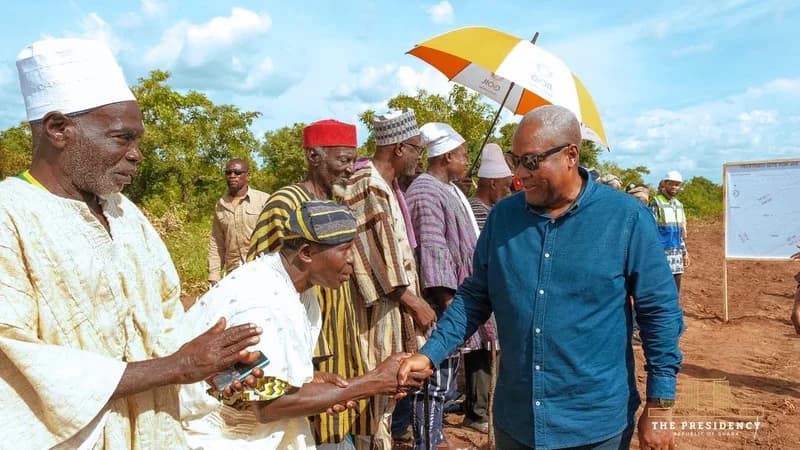
President John Dramani Mahama has reaffirmed his administration's commitment to phasing out the Double-Track System in Ghana’s senior high schools (SHS) by the end of 2027. Speaking during his 'Resetting Ghana' tour and a Citizens’ Engagement event in Wa, the President emphasized that the transition is necessary to increase contact hours between teachers and students and to ensure all learners attend and vacate school simultaneously. To support this initiative, the government has secured a $300 million facility from the World Bank and is overseeing the construction of 16 new senior high schools to address the current infrastructure deficit.
As part of these infrastructure improvements, President Mahama announced that Han Senior High School in the Upper West Region will be converted from a day school to a fully-fledged boarding institution. This move is part of a broader review of the Community Day Senior High School model to better align with local population patterns and student needs. The President noted that the government is also working to stabilize funding for secondary education through dedicated financing for SHSs and student feeding programs, which has significantly reduced the operational challenges and resource complaints previously reported by school headmasters.
In a significant move to improve education and healthcare in underserved areas, President Mahama announced a 20% salary incentive for workers posted to deprived districts. The Fair Wages and Salaries Commission has been tasked with identifying the eligible districts for this initiative, which aims to encourage professionals to accept postings to challenging environments. The President stressed that this incentive, coupled with planned improvements to local public services, is essential for ensuring that every Ghanaian community receives quality basic services regardless of its geographic location.
President Mahama also took the opportunity to debunk rumors regarding the introduction of new compulsory languages in public schools. He clarified that the Cabinet has not approved any policy to mandate Arabic or Chinese as compulsory subjects for all students. While noting that Arabic is already taught in specific English-Arabic schools to support Muslim communities, he questioned the feasibility of adding more compulsory languages given existing challenges in French education. He also expressed satisfaction with recent WASSCE results, attributing the improvement to enhanced invigilation and a renewed focus on integrity within the teaching profession.
While the government remains firm on its 2027 target to end the double-track system, the Institute for Education Studies (IFEST) has offered a different perspective, urging the government to consider maintaining the system until 2030. IFEST Executive Director Dr. Peter Anti suggested that the system remains a viable interim solution to space constraints if supported by robust investment in technology and online learning. However, the President maintains that the influx of infrastructure projects and the new World Bank funding will provide the necessary capacity to return to a single-track calendar within his proposed timeframe.
Related topic
John Mahama: Latest News & Updates →

