••
Mahama Ayariga Enforces Aayalolo Timetables Amidst National Push for Enhanced Road Safety and Automated Enforcement
•2 min read•3 sources
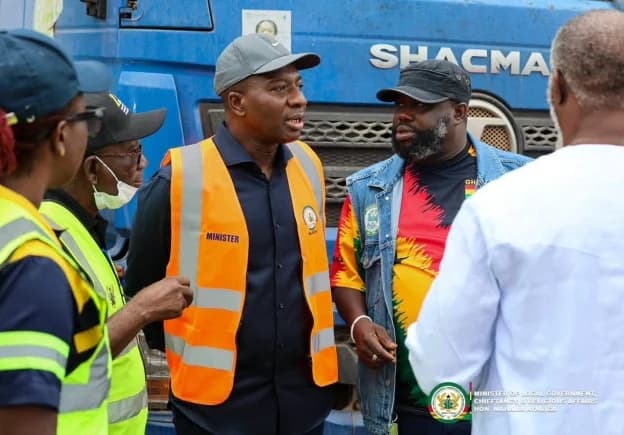
The Minister of Local Government, Chieftaincy and Religious Affairs, Mahama Ayariga, has issued a directive to the Greater Accra Passenger Transport Executive (GAPTE) to strictly adhere to the advertised schedules for the Aayalolo bus service. This instruction comes as part of a new contra-flow traffic management system designed to alleviate the chronic congestion plaguing the Greater Accra Metropolitan Area. Under the new arrangement, which began in late 2025, Aayalolo buses are permitted to travel against the standard flow of traffic during peak commuting hours, specifically from 6 a.m. to 9 a.m. and from 4 p.m. to 8 p.m. The success of the initiative is seen as critical for improving urban mobility under the current administration. The Minister emphasized that punctuality is the cornerstone of an effective public transportation culture, drawing parallels to the highly efficient transport systems in Japan. By ensuring that buses depart and arrive exactly as scheduled, the government aims to shift commuter behavior and build trust in the Bus Rapid Transit (BRT) service. The contra-flow system currently targets three major commuter corridors: Amasaman–Accra, Adentan–Accra, and Kasoa–Accra. Ayariga noted that the success of this initiative depends heavily on the collaboration of various government agencies and the commitment of GAPTE to maintain a reliable timetable. This push for transport efficiency coincides with alarming data regarding road safety in Ghana. Recent reports indicate a sharp rise in road fatalities, with deaths increasing from 2,494 in 2024 to 2,949 in 2025, alongside over 16,000 serious injuries. In response to this trend, the government is preparing to launch Traffitech-GH, an automated SMS spot-fine system scheduled for full implementation on November 1, 2026. This initiative, which utilizes a public-private partnership with Nationwide Technologies and Sensys Gatso, will use advanced camera systems to capture traffic violations and notify offenders via mobile messages. While the move toward technological enforcement is seen as a necessary step to curb accidents, analysts have raised concerns regarding public sensitization and the quality of enforcement mechanisms. For the Aayalolo contra-flow and the Traffitech-GH systems to achieve their intended goals, experts suggest that the government must prioritize transparency and infrastructure improvements. As Ghana navigates these urban mobility reforms, the focus remains on whether these systemic changes can successfully transform the nation's road safety culture and reduce the economic and human toll of traffic congestion.