••
President Mahama Advocates for African-Led Peace Financing Amid Regional Electoral Shifts and Security Crises
•3 min read•15 sources
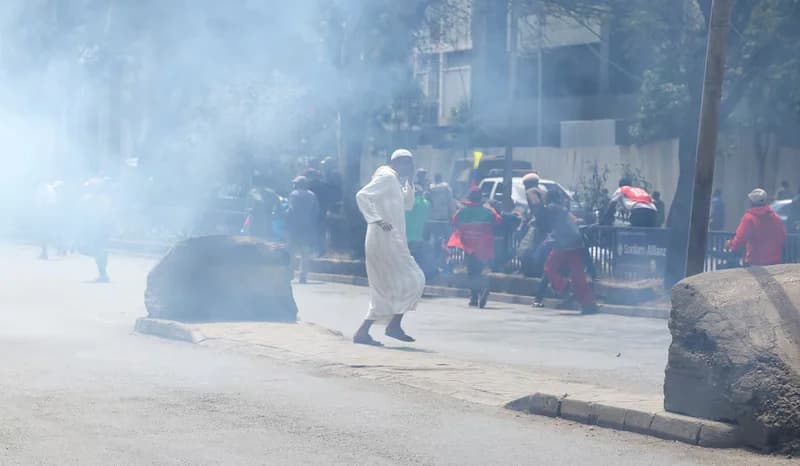
President John Dramani Mahama has called for a fundamental shift in how the African continent manages its security, urging the adoption of a predictable and flexible financing architecture to support peace initiatives. Speaking at the 21st Extraordinary Session of the African Union (AU) Assembly in Luanda, Angola, the President emphasized the need for African-owned solutions to reduce dependence on external resources. He specifically advocated for the accelerated implementation of the AU Peace Fund’s resource mobilization strategy, including a 0.2% import levy, to reach the fund's $1 billion target. President Mahama also highlighted the importance of UN Security Council Resolution 2719 and called for a transition from early warning systems to timely, decisive action in conflict zones. Beyond security, he reiterated Ghana's commitment to reparatory justice for historical injustices, following recent UN acknowledgments of the enslavement of Africans as a crime against humanity. This push for continental stability comes as several African nations navigate pivotal political transitions. President Mahama recently congratulated Zambian President Hakainde Hichilema on his re-election with 60% of the vote, viewing it as an opportunity to deepen bilateral relations between Ghana and Zambia. However, the political climate in Zambia remains tense, as opposition leader Brian Mundubile and 17 others were recently charged with treason following the election. Meanwhile, in Libya, rival administrations have reached a landmark agreement to hold long-delayed national elections within the next 24 months, aiming to reform electoral laws and unify the country after years of division. The continent's security landscape remains volatile, as evidenced by a thwarted mutiny in Niger. The military government in Niamey successfully contained an uprising, with Russia claiming its personnel assisted in repelling the attempt near the presidential palace and a key military base. In North Africa, Algerian President Abdelmadjid Tebboune has moved to reinstate the death penalty specifically for arsonists following a series of devastating forest fires that claimed at least 12 lives. This legislative shift aims to deter intentional acts of sabotage during extreme heatwaves, although Algeria has not carried out an execution since 1993. Further constitutional and social changes are unfolding in West and East Africa. In Guinea-Bissau, citizens participated in a referendum on a new constitution designed to strengthen presidential powers, while in Ethiopia, a national dialogue has proposed merging the Prime Minister’s role into a new executive presidency for Abiy Ahmed. These moves toward centralized authority coincide with civil unrest elsewhere, such as in Kenya, where police used tear gas to disperse traders protesting significant hikes in import duties. As Gabon marks a decade since the 2016 post-election violence, the emergence of calls for a Truth, Justice, and Reconciliation Commission underscores a growing demand for accountability across the continent's evolving political landscape.
Related topic
John Mahama: Latest News & Updates →

