••
President Mahama Accelerates Accra-Kumasi Expressway and National Infrastructure Under $2 Billion 'Big Push' Agenda
•3 min read•12 sources
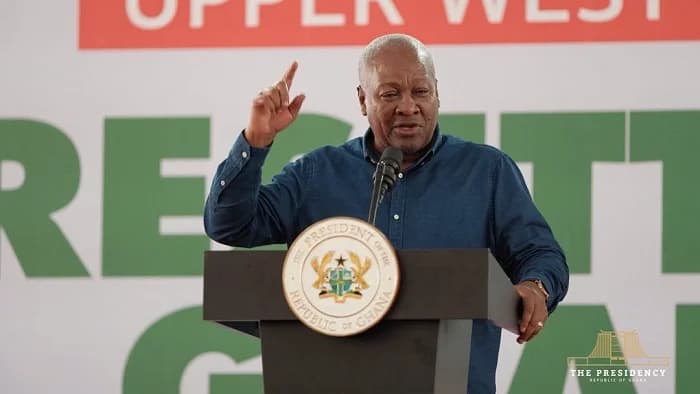
President John Dramani Mahama has reaffirmed his administration's commitment to transforming Ghana's infrastructure landscape, spearheaded by the flagship 198.7-kilometre Accra-Kumasi Expressway project. As part of the government’s "Big Push" initiative—a $2 billion annual investment program—the President announced that the Ghana Armed Forces (GAF) Engineer Corps successfully completed the clearing and preliminary works for the expressway ahead of schedule. The 175.6-kilometre clearing phase, stretching from Ablekumah to Sewuah, was finished in 19 weeks rather than the projected 20. President Mahama praised the military's efficiency and dismissed political criticisms regarding their involvement, asserting that the project is vital for reducing travel times between Ghana’s two largest economic hubs from six hours to just two hours.
To ensure fiscal discipline and transparency, Finance Minister Dr. Cassiel Ato Forson has established a dedicated Value for Money Office under the Ministry of Finance. This office will scrutinize the Accra-Kumasi Expressway as its first major task to justify costs and ensure the effective use of public funds. Dr. Forson confirmed that the government does not intend to borrow for this project, with full financing expected to be secured by December 31, 2026. Oversight of the construction will be managed by the newly formed Accra-Kumasi Expressway Limited, which will prioritize a competitive procurement process, local job creation, and technology transfer to ensure high-quality delivery and value for taxpayers.
Beyond the capital corridor, the Minister for Roads and Highways, Kwame Governs Agbodza, assured the public that all stalled sections of the existing Accra-Kumasi Highway will be completed by the end of 2027. This dual-track approach aims to provide immediate relief on existing routes while the modern expressway is being constructed. The expressway itself is designed to feature modern safety enhancements, including toll interchanges, CCTV cameras, and a 100 km/h design speed. The government’s strategy involves dividing major projects into smaller sections to engage multiple contractors, a move intended to expedite construction and meet the ambitious 2027 completion deadlines across various regions.
In a broader effort to enhance national connectivity, President Mahama also pledged a significant turnaround for the Upper West Region’s road network. During a town hall meeting in Wa, he outlined a phased strategy focusing on major trunk roads, such as the Hamile-Kumasi road and the Eastern Corridor, before addressing feeder roads. By prioritizing these critical routes, the administration aims to unlock economic potential and improve logistics for agricultural and commercial activities. President Mahama linked these developments to the foundational vision of Ghana’s first President, Kwame Nkrumah, emphasizing that robust infrastructure is the bedrock of sustainable economic expansion for future generations.


