••
Mahama Administration Accelerates Infrastructure Agenda with GH¢790M Road Investment and National Shift to Solar Lighting
•3 min read•7 sources
The Government of Ghana, under the administration of President John Mahama, is intensifying its national development agenda through a series of major infrastructure projects and a strategic shift in public utility management. Central to this effort is a GH¢790.8 million investment in feeder roads within the Nkoranza North District and the commencement of the 1.5-kilometre Dambai Bridge in the Oti Region. These projects, which align with the government’s focus on rural connectivity and economic growth, are designed to bridge the gap between agrarian hubs and urban markets while boosting regional tourism.
In the Bono East Region, the Bono Manso-Kranka-Pinihi and Tankor-Fiema-Buabeng-Busunya roads are among several critical stretches seeing steady progress, with completion targeted for March 2028. Regional Minister Francis Owusu Antwi noted that these roads are vital for reducing post-harvest losses for farmers and improving access to the Boabeng-Fiema Monkey Sanctuary. Similarly, construction on the Dambai Bridge, which began in early 2026, is projected to be finalized by May 2029, promising to transform movement across the Oti River. Meanwhile, in the Upper West Region, Wa West MP Peter Lanchene Toobu has called on local executives to rigorously monitor "Big Push" projects, specifically the Wa-Tumu Road, to ensure quality and timely delivery by contractors.
To address utility reliability and urban resilience, Minister for Roads and Highways Governs Kwame Agbodza and Minister for Energy and Green Transition John Abdulai Jinapor have announced a nationwide transition to solar-powered streetlights. This move aims to mitigate the impact of localized faults and reduce reliance on the national grid; notably, Agbodza clarified that recent traffic light failures were due to stolen underground cables rather than power supply issues. Simultaneously, the 48 Engineer Regiment of the Ghana Armed Forces has been deployed to reclaim the Lafa water retention basin in Mallam. This effort is part of a broader strategy to prevent the perennial flooding that plagues Weija and Dansoman by removing illegal structures and silt that have compromised the basin's capacity.
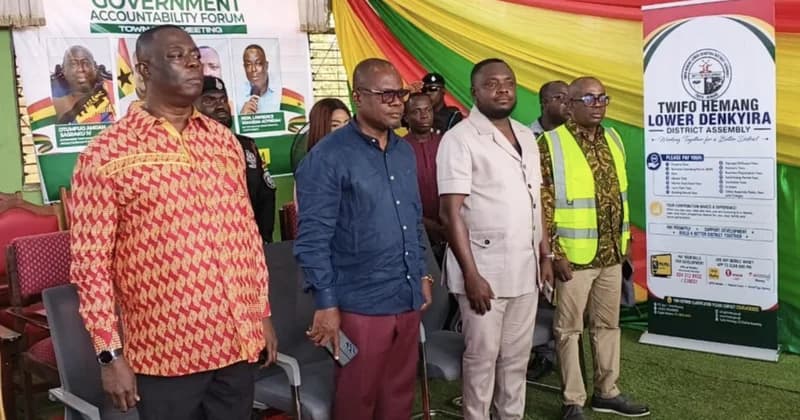
Underpinning these physical developments is a renewed emphasis on transparent local governance and community participation. Central Regional Minister Ekow Panyin Okyere Eduamoah has institutionalized public accountability forums, such as the recent engagement at Twifo Hemang, to allow citizens to evaluate the performance of Metropolitan, Municipal, and District Chief Executives (MMDCEs). Coupled with local initiatives like the new storm drains and the 24-Hour Economy Market project in Ejura-Sekyedumase, these efforts signal a comprehensive approach by the Mahama government to modernize national infrastructure while ensuring that local authorities remain answerable to the public.