••
Global InfoAnalytics finds 51% of young voters support 24-hour economy policy
•2 min read•2 sources
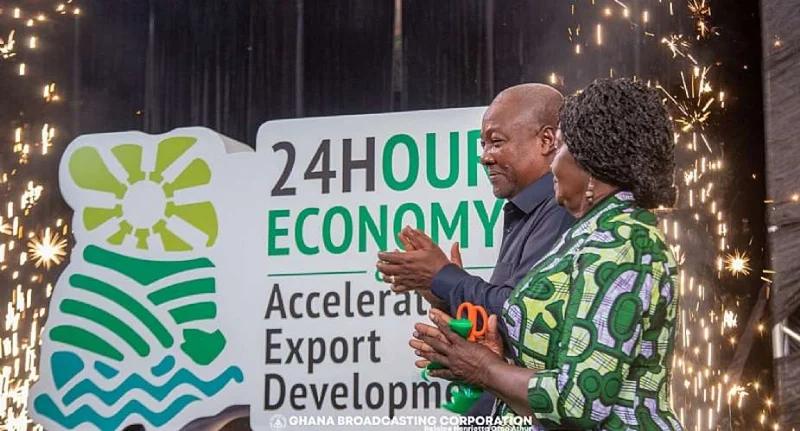
New polling data from Global InfoAnalytics reveals that a majority of young voters in Ghana approve of President John Mahama’s signature 24-hour economy policy. According to the survey, 51% of young respondents expressed satisfaction with the initiative, a figure that outperforms the 47% approval rating recorded among the general voting population. The findings suggest that the youth demographic is more receptive to the proposed economic shift than the broader electorate.
While the policy enjoys majority support within the youth demographic, approximately 32% of young voters indicated they were dissatisfied with the proposal. This level of dissatisfaction is slightly lower than the 34% dissatisfaction rate recorded across the general population. The 24-hour economy initiative is a central pillar of the Mahama administration's economic strategy, designed to transform Ghana into a round-the-clock operating environment. The government intends for the policy to boost national productivity, attract foreign investment, and address persistent unemployment by encouraging businesses to operate multiple shifts.
Despite the majority approval, the poll highlights a notable preference for other youth-focused government interventions. When compared to three other major initiatives, the 24-hour economy policy ranked lowest in preference among the youth. Young voters expressed higher levels of support for the National Apprenticeship & Adwumawura Programme, the No-Academic-Fee Policy, and the Free Senior High School (SHS) initiative. This indicates that while the youth value the structural economic changes proposed by the 24-hour economy, they currently prioritize policies that offer more immediate educational and vocational relief.
The poll results provide a significant benchmark for the administration as it moves forward with the implementation of the round-the-clock system. The stronger-than-average support among the youth provides a mandate for the government to proceed with incentivizing businesses to extend their operating hours. However, the comparative ranking suggests the government may need to further communicate the direct, tangible benefits of the 24-hour economy to young jobseekers to ensure its popularity matches that of established educational programs.
Related topic
John Mahama: Latest News & Updates →

