••
Mahama Administration Secures $1.7 Billion for Flagship Accra-Kumasi Expressway Amid Nationwide Infrastructure Push
•3 min read•25 sources
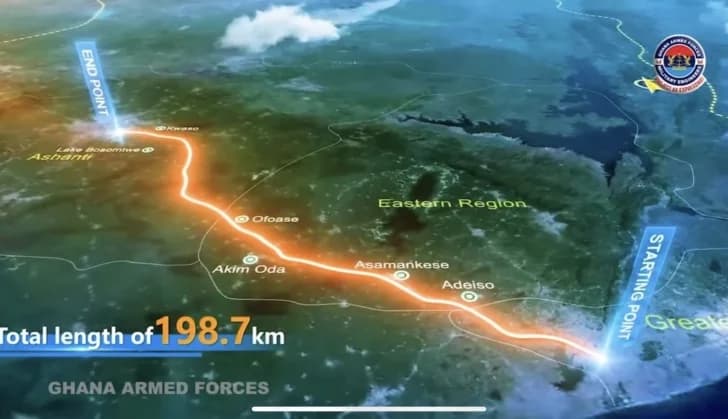
The government of President John Mahama has reached a major milestone in its infrastructure agenda, with Finance Minister Dr. Cassiel Ato Forson announcing that $1.7 billion has been secured for the construction of the Accra-Kumasi Expressway. This project, described by Presidential Spokesman Felix Kwakye Ofosu as the largest infrastructure initiative in Ghana's history, is notable for being funded entirely through domestic resources without external borrowing. The Ghana Armed Forces are reportedly nearing the completion of corridor clearing for the 176-kilometre route, with 170 kilometres already prepared for construction. The administration expects full funding to be finalized by the end of 2026, positioning the project to significantly reduce travel time and congestion between Ghana's two largest cities.
In tandem with major highway developments, Minister for Works, Housing, and Water Resources Ahmed Ibrahim is overseeing critical drainage and road works in the capital as part of the Greater Accra Resilient and Integrated Development (GARID) project. Minister Ibrahim has ordered a review of the construction timeline for the Kaneshie–Pamprom to First Light road closure, pushing for a reduction from the proposed one-year duration to between six and nine months. This project is vital for flood mitigation in the Odaw Basin. The Minister has mandated strict traffic management protocols, including well-marked diversions and public education campaigns, to minimize disruptions for motorists during the temporary closure of the Dr. Busia Highway starting in early September.
Regional connectivity remains a primary focus, with Roads and Highways Minister Governs Kwame Agbodza reaffirming commitments to several delayed projects. The Bolgatanga–Bawku–Polimakom road is now slated for completion by 2027, following funding adjustments necessitated by the Domestic Debt Exchange Programme. Similarly, the government has announced that construction for the Dunkwa-Ayanfuri road will commence in 2027 to boost economic activity in mining communities. In the Eastern Region, residents of Yilo and Lower Manya Krobo are preparing for a sod-cutting ceremony on September 5, 2026, for the Somanya-Dodowa road, while simultaneously urging the government to prioritize durable asphalt overlays to withstand heavy limestone haulage traffic.
Beyond road networks, Vice President Professor Naana Jane Opoku-Agyemang has advocated for a strategic shift toward multimodal transport, specifically calling for the accelerated development of Volta Lake as a logistics and commercial corridor. Speaking at a World Bank retreat, the Vice President emphasized that linking northern and southern Ghana via the lake would catalyze regional trade and job creation. Meanwhile, on the legal front, the Supreme Court has dismissed a review application from former Minister Kojo Oppong Nkrumah regarding an interlocutory injunction, with the five-member panel ruling the application unmeritorious. Together, these developments signal a broad-based effort by the Mahama administration to modernize Ghana's logistics framework and resolve long-standing infrastructure deficits.

