••
Maame Akosua Konadu: Highlighting the systemic struggles of rural women in Ghana’s agricultural sector
•2 min read•1 source
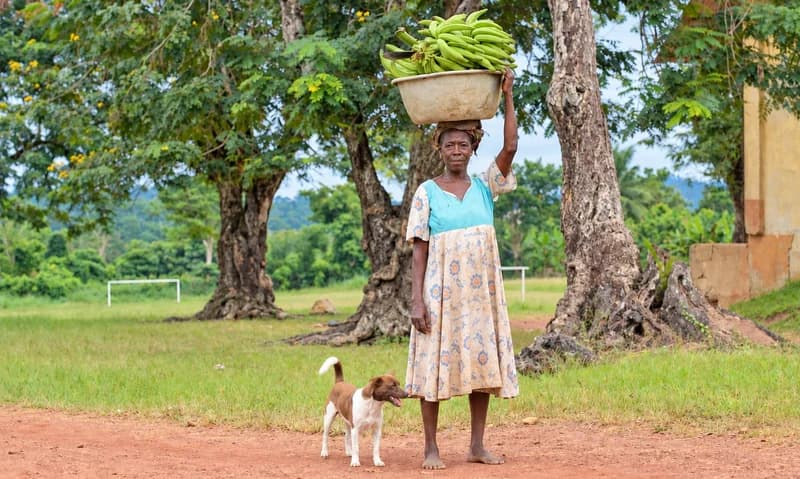
Maame Akosua Konadu, a farmer from Akroso in Ghana’s Eastern Region, embodies the grueling reality faced by many rural women who serve as the backbone of the nation's agricultural sector. Every day, Konadu embarks on a daunting 20-kilometer trek to the local market, balancing freshly harvested plantains on her head. Her journey is not merely a physical one but a reflection of a broader struggle for survival, as she attempts to navigate physically demanding labor alongside the heavy emotional and logistical weight of family caregiving responsibilities.
The challenges Konadu faces are indicative of systemic barriers that trap rural women in cycles of poverty. Despite their central role in food production, women in rural Ghana frequently work under informal and insecure conditions. Key obstacles include a lack of access to formal credit, limited educational opportunities, and restrictive property rights that hinder their ability to scale their operations or secure their livelihoods. Recent studies underscore that women carry a disproportionate share of unpaid domestic work, which further restricts their economic mobility and keeps them tethered to subsistence-level farming.
While agriculture remains a primary employment sector in Ghana, the economic potential of women like Konadu is often undermined by inadequate infrastructure and poor market connectivity. The physical toll of manual transport and the absence of modern storage or processing facilities mean that much of their hard work results in minimal financial returns. Addressing these gaps requires more than just individual resilience; it demands national interventions in infrastructure, financial inclusion policies, and the enforcement of ownership rights to empower women economically beyond their current subsistence status.
Ultimately, the story of Maame Akosua Konadu serves as a call to action for policymakers to prioritize gender-sensitive development in the agricultural sector. Improving access to finance and markets is essential not only for individual empowerment but for the overall welfare of rural families and community growth. By dismantling the systemic hurdles that rural women face, Ghana can transform its agricultural landscape into one where labor leads to secure, prosperous livelihoods rather than a perpetual cycle of survival.