••
GhIE President Ing. Ludwig Hesse Advocates for Metropolitan Governance Reform to Fix Ghana’s Transport Challenges
•2 min read•1 source
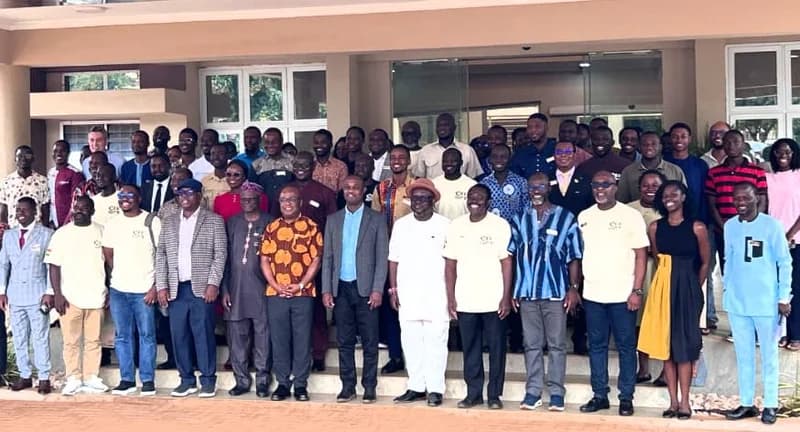
Ing. Ludwig Annang Hesse, President of the Ghana Institution of Engineering (GhIE), has called for a radical overhaul of urban governance to address the country's persistent and complex transport challenges. Speaking at the Third International Conference on Energy and Engineering (ICEE), Hesse argued that the current fragmented administrative structure is a primary obstacle to developing a modern, efficient public transportation system. He emphasized that without first addressing the underlying governance framework, technical solutions and infrastructure investments will continue to fall short of their potential impact.
Central to Hesse’s critique is the division of authority across multiple municipal and district assemblies within the same urban corridors. This fragmentation complicates comprehensive public transport planning, as individual local authorities often lack the mandate or resources to coordinate large-scale networks that cross administrative borders. To rectify this, the GhIE President urged for a shift toward a metropolitan-level approach to urban planning. Such a model would involve establishing a clear, centralized authority with the power to implement transport strategies that serve entire urban regions cohesively, rather than as a collection of isolated districts.
The conference, organized by the University of Energy and Natural Resources (UENR), served as a vital platform for experts to discuss the integration of energy solutions, industrial requirements, and academic research to drive sustainable development. Hesse noted that while robust long-term planning is essential for the future of Ghana's infrastructure, the government and industry stakeholders must take immediate, decisive action to mitigate current transport bottlenecks. He concluded that aligning governance policy with academic findings and industry capacity is the only sustainable way to ensure Ghana’s infrastructure can support its growing population and evolving economic needs.