••
Kumasi Hospital surgeons remove 880g bladder stone from 49-year-old man
•2 min read•1 source
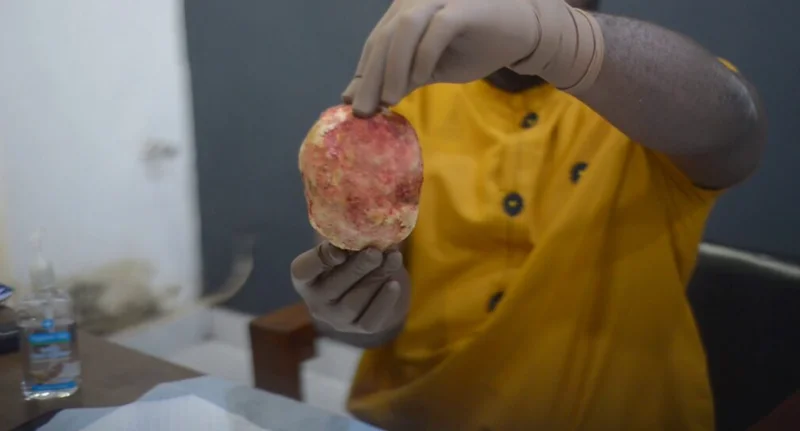
A surgical team at Kumasi Hospital in the Ashanti Region has successfully performed a rare medical procedure to remove an 880-gramme bladder stone from a 49-year-old patient. The patient, identified as Akoto, had reportedly suffered from severe urinary issues and chronic pain for nearly 30 years before undergoing the life-changing surgery. This successful intervention marks a significant milestone for the facility's urological department and provides long-awaited relief for the patient.
The bladder stone, which measured 11.8 cm in length, is being described by medical officials as one of the largest ever documented on the African continent. Dr. Samuel Koranteng Asante, the Chief Executive Officer of Kumasi Hospital, noted the rarity of the case, stating that the hospital's research into African medical literature has so far failed to find a comparable documented instance of a bladder stone of this size. While further verification against international medical databases is required to confirm its standing, the sheer mass of the stone has drawn significant attention from the local medical community.
The patient's journey to recovery follows decades of discomfort. According to hospital officials, Akoto had endured persistent symptoms that significantly impacted his quality of life since his youth. The surgical team emphasized that the successful removal of the 880g stone not only addresses the immediate physical obstruction but also prevents further potential complications such as kidney damage or severe infections that often accompany long-term bladder stones.
Following the procedure, the hospital administration issued a public health advisory regarding the prevention of such conditions. Dr. Asante and his team highlighted the critical importance of maintaining adequate hydration and seeking prompt medical attention for any urinary irregularities. They cautioned that while a stone of this magnitude is extraordinary, smaller stones are more common and can often be managed or prevented if caught early. The hospital urged the public not to ignore persistent pain or difficulty during urination, as early assessment is key to avoiding the need for major surgical interventions.
