••
KNUST partners Nana Tea Foundation for AI engineering training
•2 min read•1 source
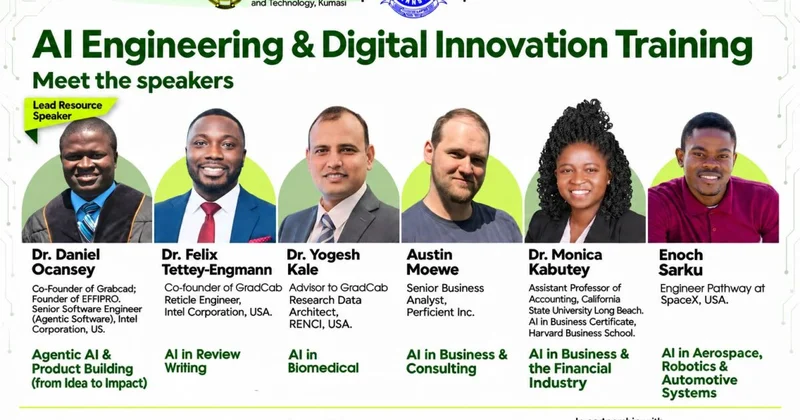
The College of Science at the Kwame Nkrumah University of Science and Technology (KNUST) has entered into a partnership with the Nana Tea Foundation to host a specialized two-day training program on Artificial Intelligence (AI) engineering and digital innovation. Scheduled for December 4-5, 2026, the initiative is designed to bridge the gap between academic theory and industry practice by providing students with hands-on experience in developing technological solutions for local challenges.
The program will guide participants through the process of building and deploying functional prototypes under the mentorship of industry professionals from various sectors. By focusing on practical application, the training aims to ensure that students acquire skills that are relevant to the rapidly evolving global technology landscape. A core objective of the collaboration is to build indigenous expertise and empower African students to lead in the field of digital transformation.
Key initiatives to be explored during the session include AI-supported platforms such as Galamsey AI and GradCab. Galamsey AI focuses on leveraging technology to mitigate the environmental degradation caused by illegal mining, while GradCab is aimed at enhancing student mobility and addressing transportation logistics. These projects represent a shift toward using data-driven tools to solve critical socio-economic and environmental issues within the Ghanaian context.
The collaboration, which also involves partners such as GradCab and AspireED, underscores the importance of institutional and private-sector synergy in advancing STEM education. By equipping the next generation of engineers with advanced AI tools and problem-solving frameworks, KNUST and its partners intend to foster a sustainable culture of innovation that contributes to the nation's broader technological and industrial advancement.

