••
JNIM fighters clash with ISSP rivals along Burkina Faso border
•2 min read•1 source
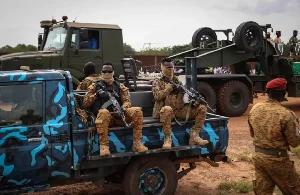
Fierce fighting has erupted between two major rival armed groups, Jama’at Nusrat al-Islam wal Muslimin (JNIM) and the Islamic State in the Sahel Province (ISSP), along the border between Burkina Faso and Mali. The conflict marks a significant escalation in the struggle for territorial dominance in the northern border regions of Burkina Faso. Since early September, the intensity of these clashes has increased as both organizations attempt to consolidate their influence in areas where the central government's presence has significantly diminished.
The ongoing battles have reportedly resulted in heavy casualties on both sides. ISSP has made several claims regarding the number of rival fighters killed, though these figures have not been independently verified by regional authorities or neutral observers. The clashes are concentrated in the porous border areas, which have become a focal point for militant activity due to the vacuum of state authority. Both groups are competing for control over strategic routes and local resources, often at the expense of civilian populations caught in the crossfire.
This internal conflict between the al-Qaeda-linked JNIM and the ISIL-affiliated ISSP reflects a broader trend of fragmentation among armed groups in the Sahel. As the state loses ground, these organizations are increasingly turning on one another to eliminate competition. The violence adds a new layer of complexity to the humanitarian crisis in Burkina Faso, where millions have already been displaced. Analysts suggest that while the infighting might temporarily weaken the groups' ability to launch coordinated attacks against the state, it ultimately leads to greater instability for those living in the disputed territories.