••
Minister Jinapor Announces 1,200MW Thermal Project as Ghana Strengthens Energy Sector Through Strategic Investments and IPP Savings
•3 min read•4 sources
The Government of Ghana has unveiled an ambitious plan to complete a 1,200-megawatt combined-cycle thermal power generation project by 2029, a move designed to significantly enhance national power supply stability and reduce the cost of electricity. Speaking at the 2026 Future of Energy Conference, the Minister of Energy and Green Transition, Dr. John Abdulai Jinapor, emphasized that the project is a cornerstone of the nation’s strategy to achieve universal electricity access by 2030. With current access standing at 90%, the government is focusing on innovative financing mechanisms and improved risk allocation to ensure that new energy infrastructure does not place an undue financial burden on consumers while supporting rapid industrialization.
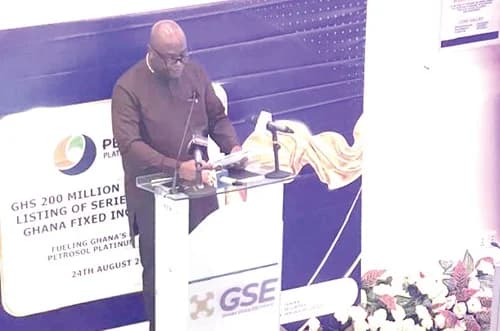
In a parallel boost to the energy sector's financial landscape, Petrosol Platinum Energy PLC has successfully listed a GH₵100 million bond on the Ghana Fixed Income Market of the Ghana Stock Exchange (GSE). The issuance, which forms part of a larger GH₵200 million note program, saw a remarkable 178% oversubscription, signaling robust investor confidence in the Ghanaian oil marketing sector. Petrosol CEO Michael Bozumbil indicated that the proceeds would fund the company's expansion, including its network of 109 fuel stations and new renewable energy initiatives. GSE Managing Director Abena Amoah noted that this listing reflects the resilience of the local capital market, which has seen 15 corporate entities raise approximately GH₵24 billion since 2015.
Efforts to revitalize the upstream petroleum sector are also advancing, as the government opens high-level negotiations with the Brazilian oil major Petrobras. These talks focus on the exploration of four offshore blocks in the Accra-Keta Basin, marking Petrobras as the first major international firm to engage in this specific exploration phase. Petroleum Commission CEO Victoria Emeafa Hardcastle highlighted that the government is prioritizing regulatory clarity and the resolution of industry disputes to restore investor confidence. This initiative is complemented by a $2 billion commitment from existing partners aimed at increasing domestic oil and gas production to lower prices and enhance energy security.
To further stabilize the sector’s fiscal health, the Ministry of Energy and Green Transition announced that it has secured approximately $250 million in savings through successful renegotiations with Independent Power Producers (IPPs). These negotiations are part of a broader fiscal strategy to alleviate financial pressures within the energy value chain and ensure more reliable payment structures for power providers. By restructuring these contracts, the government aims to create a more sustainable environment for both domestic and international energy investors, reducing the overall debt profile of the national utility companies.
Looking ahead, the 2026 Future of Energy Conference, organized by the Africa Centre for Energy Policy, underscored the necessity of leveraging Africa’s vast mineral wealth to transform the continent's energy systems. Discussions centered on the requirement for competitive energy markets to drive industrial growth and the importance of better risk assessment in attracting long-term capital. As Ghana moves toward its 2029 and 2030 energy milestones, the integration of innovative corporate financing, strategic international partnerships like the Petrobras deal, and disciplined fiscal management of power contracts are expected to remain the primary drivers of the nation's energy transition.
