••
Minister John Abdulai Jinapor Outlines 1,000MW Nuclear Goal and Strategic Investment Drive to Secure Ghana’s Energy Future
•2 min read•6 sources
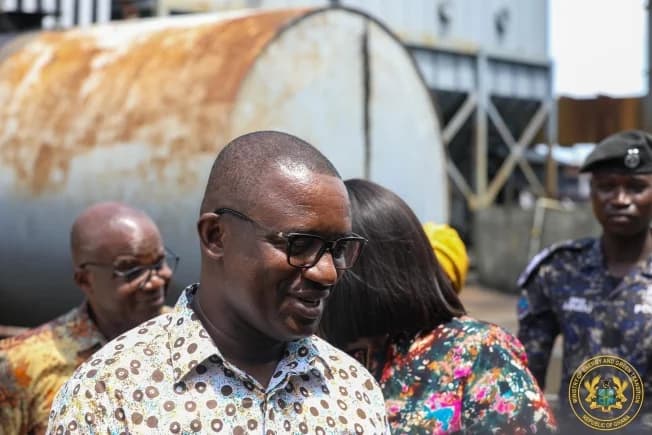
Energy Minister John Abdulai Jinapor has outlined a bold vision for Ghana’s energy sector, emphasizing the integration of 1,000 megawatts of nuclear power into the national grid by 2030. Speaking at the third US-Africa Nuclear Energy Summit in Accra, the Minister highlighted nuclear energy as a critical, low-carbon solution to support industrialization and meet a peak electricity demand that has surged to 4,500 megawatts. This strategic shift comes as the nation’s traditional hydroelectric resources face depletion and thermal generation costs remain high. The initiative is supported by the United States, which has pledged cooperation and training to develop a skilled nuclear workforce capable of adhering to international safety standards.
While planning for a nuclear future, the government is also calling for immediate strategic positioning within the global energy market. During the 15th anniversary of the Petroleum Commission, Minister Jinapor urged the petroleum and energy sectors to enhance Ghana's investment climate to attract major industry players despite global market volatility. This drive for investment is paired with efforts by the Petroleum Commission to balance regulatory oversight with incentives for local companies, ensuring that the country remains a competitive hub for upstream petroleum activities.
However, these long-term goals are set against a backdrop of significant infrastructure challenges and immediate operational hurdles. The Ghana Grid Company Limited (GRIDCo) recently announced a 15-hour power interruption in parts of Greater Accra to replace a transmission tower damaged by a tanker explosion on the 161kV Tema-Achimota line. Further complicating the outlook, Benjamin Nsiah, Director for the Centre for Environmental Management and Sustainable Energy, warned that much of the nation’s power supply infrastructure is over 40 years old. Nsiah noted that resolving these deep-seated structural issues and meeting increasing demand, particularly in the Volta Enclave, may take up to a year of sustained financial and technical intervention.
To manage current demand-side pressure, the Energy Commission has partnered with the Ghana Hotels Association to launch an extensive energy efficiency training program. This initiative, which spans the Bono East, Northern, and Upper East regions, targets hotel owners and managers to improve compliance with new energy regulations. By encouraging the adoption of energy-efficient appliances and technologies like motion sensors, the Commission aims to help the hospitality sector reduce operational costs and greenhouse gas emissions. These efforts collectively reflect a multi-tiered approach to stabilize Ghana’s energy landscape through immediate efficiency, infrastructure renewal, and long-term nuclear diversification.

