••
Energy Minister Dr. John Jinapor Announces $1.47 Billion Debt Clearance and Strategic Nuclear Power Goals for Ghana
•3 min read•5 sources
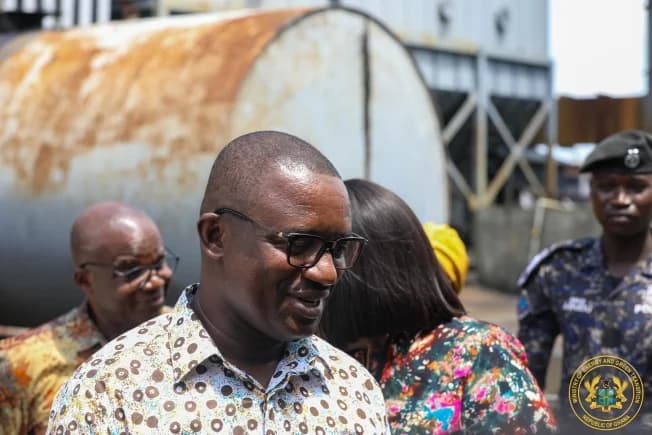
Ghana's Energy and Green Transition Minister, Dr. John Abdulai Jinapor, has announced a series of landmark achievements and strategic shifts aimed at stabilizing the nation's energy sector. Central to these reforms is the successful clearance of approximately $1.47 billion in legacy debt that had long hampered the industry's financial health. This financial turnaround was bolstered by significant cost-saving measures, including $500 million saved by transitioning power generation from expensive liquid fuels to natural gas and an additional $250 million through the strategic renegotiation of contracts with Independent Power Producers (IPPs). These developments represent a major step toward restoring fiscal discipline and operational efficiency within the national grid. In tandem with these financial gains, the Public Utilities Regulatory Commission (PURC) has officially inaugurated its new Head Office Complex in Accra. Funded entirely through improved cash flow generated by the Cash Waterfall Mechanism, the modern facility symbolizes a new era for utility regulation in the country. Executive Secretary Dr. Shafic Suleman and Minister Jinapor emphasized that the commission is moving beyond simple tariff adjustments toward comprehensive oversight of the electricity, water, and natural gas sectors. This enhanced regulatory capacity is expected to improve consumer service delivery and ensure that the Electricity Company of Ghana (ECG) provides better value for money while maintaining the financial sustainability of utility providers. While the downstream and regulatory sectors see growth, the upstream petroleum industry faces critical challenges that require immediate attention. Minister Jinapor warned of declining oil production and diminishing reserves, necessitating urgent collaboration between the Ghana National Petroleum Corporation (GNPC) and the Petroleum Commission. However, there is renewed optimism following the resolution of several long-standing legal disputes with key operators. Emeafa Hardcastle, CEO of the Petroleum Commission, noted that these settlements have paved the way for a US$3.5 billion investment pipeline. This capital influx will focus on frontier exploration and the development of major projects such as Pecan and Eban-Akoma to ensure the long-term sustainability of Ghana's oil and gas sector. Looking toward future energy security, the government is aggressively pursuing a nuclear power program to diversify Ghana's energy mix. With peak electricity demand surging to 4,500 megawatts—a massive increase from the 300 megawatts required during the early days of the Akosombo Dam—and traditional hydroelectric resources reaching their limits, the administration aims to integrate 1,000 megawatts of nuclear power by 2030. Speaking at the third US-Africa Nuclear Energy Summit, Dr. Jinapor underscored the necessity of low-carbon, affordable electricity to drive industrialization and economic growth. This transition, supported by technical cooperation and training from the United States, represents a long-term commitment to providing reliable power while adhering to the highest international safety standards.