••
Jane Naana Opoku-Agyemang pledges industrial support for women at 5th GWES
•2 min read•2 sources
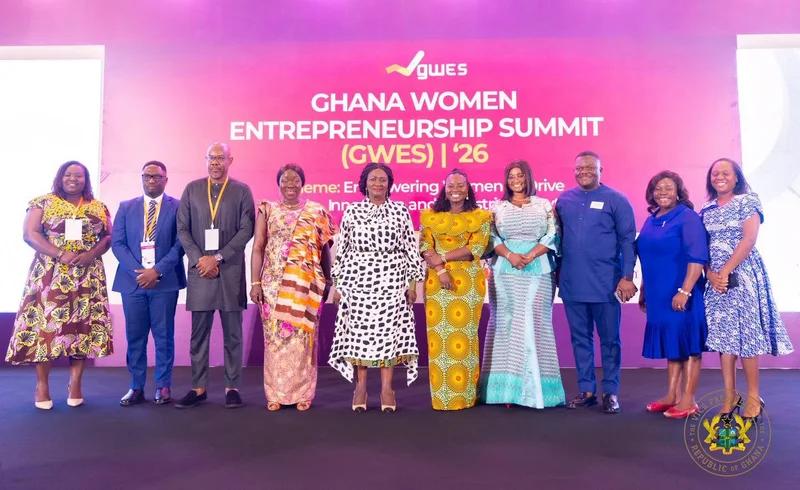
Vice President Professor Jane Naana Opoku-Agyemang has reaffirmed the government’s dedication to women’s economic empowerment, emphasizing the need to transition female-led businesses from small-scale ventures to large industrial operations. Speaking at the 5th Ghana Women Entrepreneurship Summit (GWES 2026) in Accra, she underscored the pivotal role women-owned businesses play in the nation's economic transformation. The summit, held under the theme "Empowering Women to Drive Trade, Innovation and Industrial Growth," served as a platform for stakeholders to address the structural barriers facing female entrepreneurs.
A central pillar of the Vice President's address was the role of the proposed Ghana Women’s Development Bank. Professor Opoku-Agyemang highlighted the institution as a critical tool for alleviating the chronic financial constraints that often hinder the growth of businesses owned by women. By providing targeted financing and innovative financial solutions, the bank is intended to create a more enabling environment, allowing these enterprises to scale up and compete effectively in both domestic and international markets.
Supporting this vision, the Minister for Trade, Agribusiness, and Industry, Mrs. Elizabeth Ofosu-Adjare, detailed several government interventions designed to expand market access. She noted that more than 1,300 entrepreneurs have already benefited from specialized export training, a move aimed at enhancing the global competitiveness of Ghanaian products. Additionally, the CEO of the Ghana Enterprises Agency, Margaret Ansei, called for bolstered institutional support and creative funding mechanisms to ensure that women entrepreneurs can thrive in a modernizing economy.
The summit concluded with a call for sustained collaboration between stakeholders to ensure that women remain at the forefront of Ghana's industrialization drive. By prioritizing access to finance, market opportunities, and technical training, the government aims to position women entrepreneurs as central drivers of innovation and sustainable trade. This initiative forms part of a broader strategy to foster an inclusive economy where women-led enterprises serve as key engines for national development.
