••
Education Minister Haruna Iddrisu Unveils GH¢2.8bn Infrastructure Plan and Launches 2026 Ghana Teacher Prize
•2 min read•4 sources
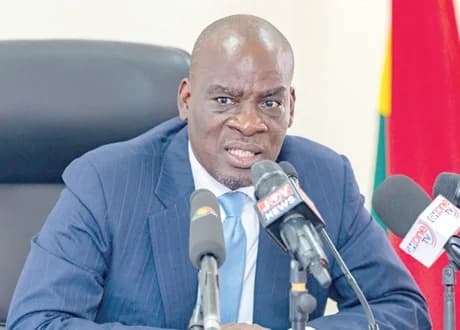
The Minister for Education, Haruna Iddrisu, has outlined a comprehensive strategy to transform Ghana's educational landscape, committing approximately GH¢2.8 billion to infrastructure while emphasizing that increased access must translate into improved learning outcomes. Speaking at several high-profile events, including the launch of the 2026 Ghana Teacher Prize and the Regional Foundational Learning Evidence and Implementation Support Day, the Minister highlighted a significant shift toward evidence-based policy and foundational competency in literacy and numeracy. This vision is supported by a substantial GH¢33.3 billion allocation to the education sector in the 2026 budget.
The GH¢2.8 billion infrastructure push, funded through the US$300 million STARR-J facility, is designed to address critical gaps in secondary and basic education. Minister Iddrisu underscored the urgency of this investment by citing an Auditor-General’s report which revealed that approximately 10,700 public basic schools currently lack classrooms, affecting millions of pupils nationwide. He advocated for transparent procurement processes and stressed that while infrastructure is vital, the ultimate measure of success is the competency of students. The Minister also noted the constitutional mandate for free, compulsory, and universal basic education, suggesting an emergency response is needed to address foundational gaps even as the nation maintains free secondary education.
Parallel to physical infrastructure, the Ministry and the National Teaching Council (NTC) have officially launched the 2026 Ghana Teacher Prize to recognize the invaluable contributions of educators to national development. NTC Board Chairman Kwami Alorvi and Minister Iddrisu emphasized that teacher welfare is central to the government's agenda. To this end, the government is introducing a new rural posting allowance and working to address long-standing accommodation challenges for teachers. These incentives are intended to provide professional support and improve the conditions under which teachers operate, particularly in underserved communities.
Looking toward the future, the government is modernizing the classroom experience through a revised curriculum for kindergarten to Primary Six. This update integrates digital skills, including robotics, coding, and Artificial Intelligence (AI), as core components of foundational learning. By combining large-scale infrastructure investment with teacher incentives and a technology-driven curriculum, the Ministry aims to ensure that every Ghanaian child gains the necessary literacy, numeracy, and digital skills to thrive in a modern economy. These initiatives, including the Ghana Accountability for Learning Outcomes Project (GALOP), reflect a commitment to data-driven educational reform.

