••
Haruna Iddrisu proposes joint degree programmes with European universities
•2 min read•1 source
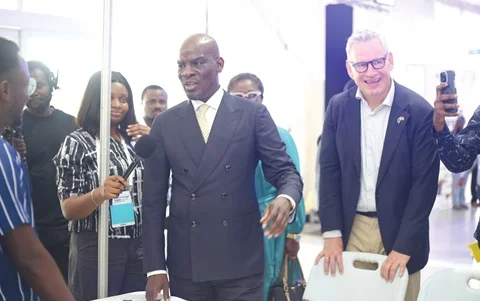
The Minister of Education, Haruna Iddrisu, has formally invited European universities to establish partnerships with Ghanaian higher education institutions to offer joint degree programmes. Speaking at the Study in Europe Fair 2026 held at the University of Ghana, the Minister emphasized that these collaborations would enable Ghanaian students to earn internationally recognized qualifications while remaining in the country. This initiative is designed to broaden access to global education standards without the logistical and financial burdens often associated with moving abroad entirely.
The proposed collaborations are expected to focus on critical areas of national development, including Science, Technology, Engineering, and Mathematics (STEM), renewable energy, and climate-resilient agriculture. By targeting these fields, the Ministry of Education hopes to address specific skills gaps within the Ghanaian economy and promote sustainable industrial growth. Minister Iddrisu emphasized that such programmes would combine the academic rigor of European institutions with local context and expertise, creating a unique educational experience for participants that aligns with Ghana's developmental needs.
The Study in Europe Fair served as a comprehensive platform for students to explore diverse educational paths. The event featured interactive sessions with university representatives and alumni, offering guidance on scholarship opportunities and research grants. Beyond student recruitment, the fair functioned as a strategic forum for academic leaders to discuss long-term research collaborations and institutional capacity building between Ghana and European partners. These interactions are seen as a key step in supporting the government's broader education and research agenda.
This initiative reflects the government's commitment to modernizing the education sector through international cooperation. By fostering these ties, Ghana aims to enhance its research capacity and academic prestige on the continent. The Ministry of Education has indicated that it will continue to engage with diplomatic and educational partners to streamline the implementation of these joint degree programmes, ensuring they align with national accreditation standards and contribute to the country's long-term goals for human capital development.