••
Haruna Iddrisu imposes two-year ban on early BECE candidates
•2 min read•10 sources
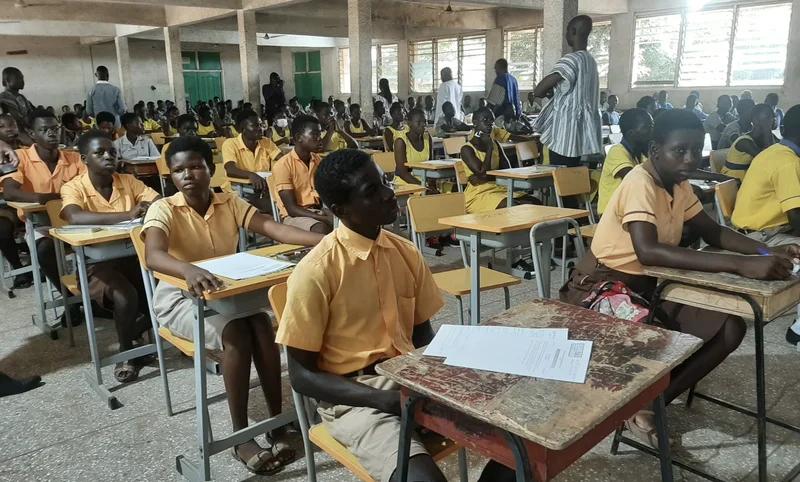
Education Minister Haruna Iddrisu has announced an immediate two-year ban for Junior High School (JHS) students who attempt to sit for the Basic Education Certificate Examination (BECE) before their final year. Speaking at the 2026 National Education Week and Evidence Summit in Accra, the Minister instructed the Ghana Education Service (GES) to enforce the restriction against pupils in JHS 1 and JHS 2. The measure is designed to instill discipline, ensure equity, and allow authorities to accurately project the number of students completing basic education annually. Iddrisu also criticized parents who pressure their children to take the exams prematurely, asserting that such practices undermine the fairness of the national assessment system.
The West African Examinations Council (WAEC) and the parliamentary Education Committee have expressed support for the directive, citing the importance of the established nine-year basic education cycle. WAEC Deputy Director of Public Affairs, Lilian Frimpong, emphasized that continuous assessment over three years is a prerequisite for the BECE, making it illegal for regular school pupils to register early. Similarly, Peter Kwasi Nortsu-Kotoe, Chairman of Parliament’s Education Committee, argued that skipping years defeats the intent of the 1987 educational reforms and could encourage a general disregard for academic norms.
However, the directive has faced pushback from educational think tanks and parent-teacher associations who advocate for gifted learners. The National Council of Parent-Teacher Associations (NCPTA) and the Institute for Education Studies (IFEST) have both called for the Ministry to include exceptions for exceptionally talented students. IFEST Executive Director Dr. Peter Anti Partey and NCPTA General Secretary Raphael Kofi Gapson argued that holding back children with advanced literacy and critical thinking skills could waste their potential and state resources. Additionally, Fred Kyei Asamoah, an MP on the Education Committee, challenged the government to provide evidence that early candidates perform poorly before enforcing such a restriction.
Despite the policy's intent, Africa Education Watch has warned that the ban may prove ineffective without a robust monitoring framework. Executive Director Kofi Asare pointed out that Ghana still lacks the unique student identification system promised in 2018, which is essential for tracking academic progression. He noted that without such a system, it remains difficult to prevent private schools from falsifying records to facilitate early examination sittings. The Ministry has signaled its commitment to addressing these infrastructure challenges, including a $300 million World Bank-supported project to expand secondary education and improve school tracking mechanisms.
graphic.com.gh
PrimaryeducationEducation Ministry bans 'early' BECE writing: Offenders face 2-year exam suspension
myjoyonline.com
educationBECE directive must make room for exceptionally talented pupils – NCPTA
myjoyonline.com
educationGifted students should be exempted from BECE age restriction – IFEST
myjoyonline.com
educationGifted children should not be punished for advancing faster – Offinso North MP
myjoyonline.com
educationAllowing children to write BECE early defeats 9-year basic education policy – Nortsu-Kotoe
myjoyonline.com
educationRegular JHS pupils must complete three years before BECE – WAEC
myjoyonline.com
educationEarly BECE ban ineffective without student tracking system – Africa Education Watch
citinewsroom.com
educationPupils who write BECE ahead of schedule to face two-year ban – Haruna Iddrisu
classfmonline.com
educationPremature BECE candidates face two-year ban - Education Minister warns parents, students
modernghana.com
educationEducation Minister orders two-year BECE ban for pupils who sit examination ahead of schedule

