••
Gunmen kill more than 60 Christians in Ethiopia's Oromia region
•2 min read•1 source
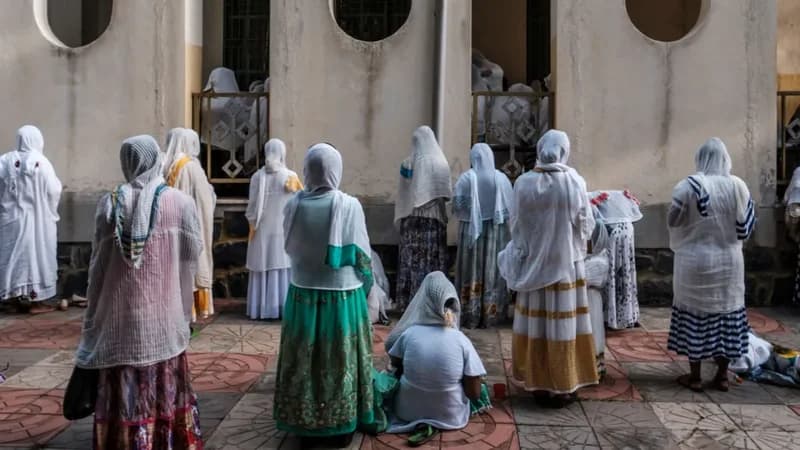
More than 60 Christians have been killed in what the Ethiopian Orthodox Tewahedo Church is describing as a "massacre" in the Oromia region of Ethiopia. The victims were reportedly targeted in a series of coordinated ambushes where attackers surrounded civilians from all directions, leaving little room for escape. Among the dead are several children, and witnesses have reported that many homes were burned to the ground during the assault, leaving survivors displaced and in mourning. This latest surge in violence highlights the deepening ethnic and religious tensions within the region, prompting urgent calls from church leaders for the government to provide better protection for vulnerable communities.
While the regional government has pledged to take swift action against those responsible, the identity of the attackers remains a point of contention. Local authorities have attributed the violence to a new rebel coalition that reportedly includes the Oromo Liberation Army (OLA). However, the OLA has issued a formal denial, distancing itself from the killings and the allegations of involvement. The lack of clarity regarding the perpetrators has complicated the security response, as various armed groups continue to operate within the volatile Oromia territory.
The Ethiopian Orthodox Tewahedo Church has expressed grave concern over what it perceives as a rising trend of attacks specifically targeting its members. According to reports from the Ethiopian Human Rights Council, the scale of this violence is part of a broader, more persistent pattern. The council noted that over the past four years, similar assaults in the region have claimed the lives of at least 458 people. This context underscores the precarious security situation for religious and ethnic minorities in Oromia, where historical grievances and political instability often overlap.
In response to the massacre, church officials are demanding that both the federal and regional governments implement robust security measures to prevent further bloodshed. They argue that the failure to hold perpetrators accountable has only emboldened armed groups to carry out more daring raids. As the Oromia regional government promises justice, human rights organizations continue to monitor the situation, fearing that without significant intervention and a resolution to the underlying ethnic conflicts, the cycle of religious and communal violence in Ethiopia will continue to escalate.
