••
Conakry Landfill Collapse: At Least 30 Dead as Heavy Rains Bury Homes in Guinea
•2 min read•2 sources
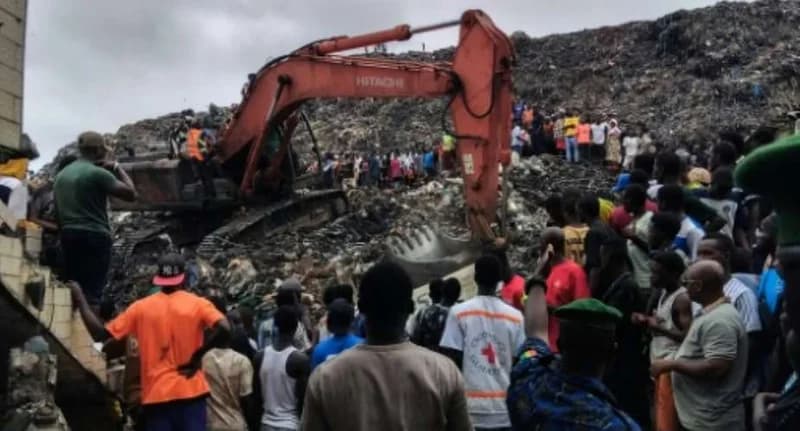
A catastrophic landfill collapse in Guinea’s capital, Conakry, has claimed the lives of at least 30 people and left several others injured following a period of intense rainfall. The disaster occurred early Sunday morning when a massive mound of refuse gave way, sliding onto residential homes in the Dar-es-salam neighborhood of the Bbessia district. While initial reports from witnesses and officials indicated a recovery of 18 bodies, the confirmed death toll has since risen to 30 as search and rescue teams continue to navigate the debris.
Witnesses described a scene of devastation as the saturated waste material overwhelmed the community under the cover of darkness. Emergency responders and local residents have been working tirelessly to recover bodies from the site, with at least six individuals reported injured and receiving medical attention. The recovered remains are being transported to a local morgue as the scale of the tragedy becomes clearer. The collapse highlights the extreme vulnerability of informal settlements located near waste management sites, particularly during the region's peak rainy season.
Prior to this tragedy, the Guinean government and local officials had identified the Dar-es-salam landfill as a high-risk zone. Concerns regarding the stability of the refuse mounds had prompted official warnings and recent safety measures intended to mitigate the danger to the public. Reports indicate that the government had previously attempted to expel residents from the immediate vicinity and enforce safety zones to prevent such a catastrophe; however, the continued presence of homes in the danger zone suggests significant challenges in enforcing relocation orders.
As recovery operations continue, the incident has sparked renewed scrutiny of urban planning and waste management infrastructure in West African metropolitan areas. The Dar-es-salam neighborhood remains on high alert, as saturated ground and further rainfall could potentially trigger additional slides. Moving forward, Guinean authorities face the immediate task of managing the humanitarian crisis while seeking long-term solutions to ensure that such a preventable disaster does not recur in Conakry’s at-risk districts.