••
GSAA and GIISDEC Demand Apolitical Mining Enforcement Amid Green Ghana Project Failure
•2 min read•4 sources
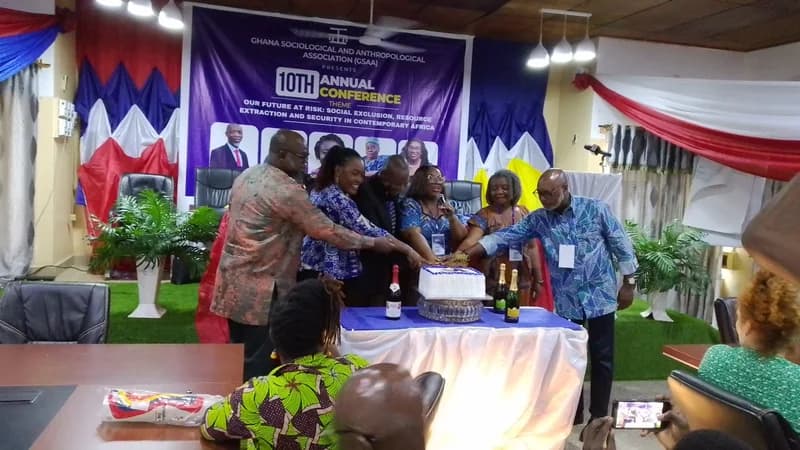
The Ghana Sociological and Anthropological Association (GSAA) and state agencies are intensifying calls for decisive action to address the devastating impacts of illegal mining, commonly known as galamsey. During its 10th Annual Conference, the GSAA labeled the destruction of water bodies, farmlands, and community health as "intolerable," demanding that the government enforce environmental laws without political bias. This plea for apolitical governance coincides with recent field operations by the Ghana Integrated Iron and Steel Development Corporation (GIISDEC) and the National Anti-Illegal Mining Operations Secretariat (NAIMOS), which targeted illegal operators in the Akango area of the Nzema East Municipality. Led by CEO Williams Okofo-Dateh, the joint operation near the River Ankobra resulted in the seizure of mining equipment intended for decommissioning to mitigate further environmental damage. Okofo-Dateh emphasized that while these raids are successful, sustainable progress requires significantly more resources for continuous oversight to prevent miners from returning to cleared sites. Beyond enforcement, the GSAA, represented by Professor William Boateng, has urged a shift toward competitive hiring in public service and the establishment of robust, documented compensation agreements between mining firms and local communities to ensure fair recovery of livelihoods. While the government focuses on enforcement, Ghana's reforestation efforts are facing severe criticism following a Daily Graphic investigation into the Green Ghana Project. The report revealed a staggering 90% mortality rate for seedlings planted in the Upper East Region, despite official claims of 60-80% survival rates. Independent checks of a sample of 1,900 seedlings found that only 7.5% had actually survived. Local farmers and investigators pointed to a lack of consultation regarding species suitable for the northern climate, inadequate maintenance, and extreme weather as primary causes. This failure has sparked fresh scrutiny over seedling procurement and financial accountability within the Forestry Commission and the Ministry of Lands and Natural Resources. The regional urgency for improved resource governance is further highlighted by a humanitarian tragedy in neighboring Nigeria, where a panel is investigating the deaths of 37 young men in a crowded detention cell in Niger State. The deceased had been arrested for suspected illegal gold mining, and their deaths have drawn condemnation from Amnesty International. As Ghana navigates its own environmental challenges, from the persistent threat of galamsey to the failure of large-scale tree-planting initiatives, experts argue that success will depend on moving beyond rhetoric toward transparent, science-based policies and rigorous institutional accountability to protect the nation's natural heritage.
Live rates
Ghana gold price →