••
Global Quality Assurance Association and STEMAIDE Africa Lead Push for Practical AI and STEM Education in Ghana
•2 min read•14 sources
Ghana’s educational and professional sectors are undergoing a significant shift toward practical application and the ethical integration of artificial intelligence, as evidenced by several upcoming high-level engagements. The Global Quality Assurance Association (GQAA) has announced two major events for October 2026 in Accra: the 4th International Convention on Quality Assurance in Library and Information Services (LIS) and a Three-Day Professional Quality Assurance Masterclass Series. Scheduled for October 20-22 and October 27-29 respectively, these events will be hosted at the University of Ghana and will focus on the theme of 'Transforming Global Library Quality: Innovation, Collaboration and Intelligent Systems for Sustainable Information Services.' The convention and masterclasses aim to equip academics and professionals with the skills needed to navigate a digital landscape, specifically emphasizing the ethical use of AI tools and the practical implementation of quality principles.
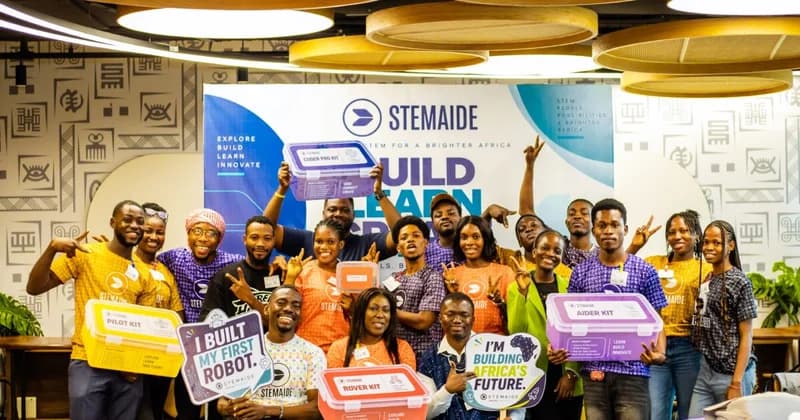
Parallel to these professional developments, technology company STEMAIDE Africa has introduced four new STEM learning kits designed to bridge the gap between theoretical learning and practical experience. These kits—AIDER (advanced tech), ROVER (robotics), CODER PRO (IoT and coding), and PILOT (aerospace engineering)—are intended to help students and businesses utilize AI and robotics to enhance productivity. This initiative aligns with growing calls for a more hands-on educational framework. Ing. Dr. Lucy Agyepong of Academic City University recently highlighted that current engineering curricula often fail to address local challenges like climate resilience, urging a shift away from academic filtering toward training that focuses on real-world, context-specific problem solving.
In the realm of policy and institutional recognition, the government and professional bodies are reinforcing the need for tangible results from academic research. During the second Applied Research Conference of Accra Technical University, Chief of Staff Dr. Julius Debrah emphasized that while Ghana is rich in innovation, there is an urgent need to translate research into practical solutions that advance national development. Simultaneously, the Ghana Institution of Engineering (GhIE) has launched the 2026 Engineering Excellence Awards (EEA) to celebrate achievements that provide clear societal benefits. These collective efforts signal a nationwide commitment to ensuring that Ghana's digital and industrial transformation is supported by a workforce that is not only highly trained but also capable of applying innovative technologies to solve the country's most pressing infrastructure and developmental challenges.


