••
Presidential Advisor Reveals $5.5 Billion Commitment to 24-Hour Economy as Ghana Targets Value-Added Trade and Industrial Resilience
•3 min read•16 sources
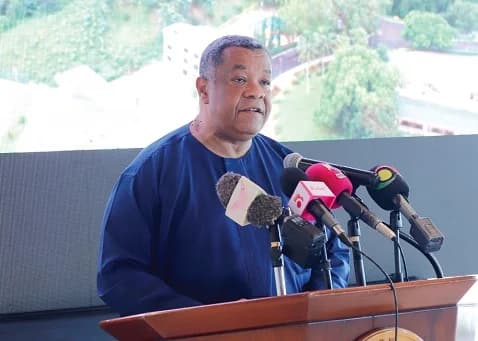
Ghana’s economic landscape is undergoing a significant transformation, anchored by the 24-Hour Economy programme, which has successfully secured $5.5 billion in project commitments one year after its July 2025 launch. Presidential Advisor Augustus Goosie Tanoh revealed that these private sector-led investments, which include the $1.45 billion WAPCo Solar project and up to $3 billion in additional renewable energy ventures, are projected to create 1.7 million jobs by 2028. This initiative is a central pillar of President John Mahama’s administration, aimed at transitioning the nation from an import-dependent model to a self-sufficient, round-the-clock productive economy focused on manufacturing and agriculture.
Parallel to these domestic investments, Finance Minister Dr. Cassiel Ato Forson is spearheading a strategic shift in Ghana’s trade relationship with China. Moving away from traditional raw material exports, the government is advocating for value-added trade, local processing, and technology transfer. To facilitate this, stakeholders from the financial and academic sectors have proposed a Ghana–China Zero-Tariff Fund. This dedicated financing mechanism is designed to help small and medium-sized enterprises (SMEs) overcome capital barriers and leverage China’s zero-tariff policies through innovative solutions like contract farming and warehouse financing. GOIL PLC CEO Edward Abambire Bawa further emphasized this need for local empowerment, calling for structured technology transfers and affordable long-term financing to bolster indigenous companies in the petroleum sector.
However, this growth trajectory faces challenges from legacy financial issues and the need for institutional reform. The Ghana Mineworkers’ Union (GMWU) has intensified demands for the release of GH₵380 million in provident funds locked in distressed financial institutions, highlighting the severe hardship faced by over 19,000 workers and retirees. Addressing these vulnerabilities, Stanbic Bank Executive Barbara Dede Ama Okai-Tettey argued at the Risk Summit 2026 that true institutional resilience requires a cultural shift beyond mere compliance toward proactive risk management and diversity of thought. Her call for strategic governance was echoed by the National Disaster Organisation (NADMO) and the Ministry of Finance, who recently launched capacity training with the UNDP to strengthen disaster risk financing against climate-related threats like flooding.
Infrastructure and social responsibility also remain at the forefront of the national agenda. Togbe Afede XIV has announced new aviation and aerospace projects in Ho, including a pilot training school, while Star Oil CEO Philip Kwame Tieku is advocating for a modern coastal ferry service to improve regional connectivity. On the corporate front, MTN Ghana has pledged a GH₵20 million support package to assist citizens returning from South Africa, focusing on long-term reintegration. As Ghana prepares for the Millennium Excellence Week 2026 and major trade fairs, the focus remains on building a robust, integrated economic framework that balances aggressive industrial investment with social protection and financial stability.
Related topic
John Mahama: Latest News & Updates →

