••
Ghana Meteorological Agency urges national action against El Niño threat
•2 min read•2 sources
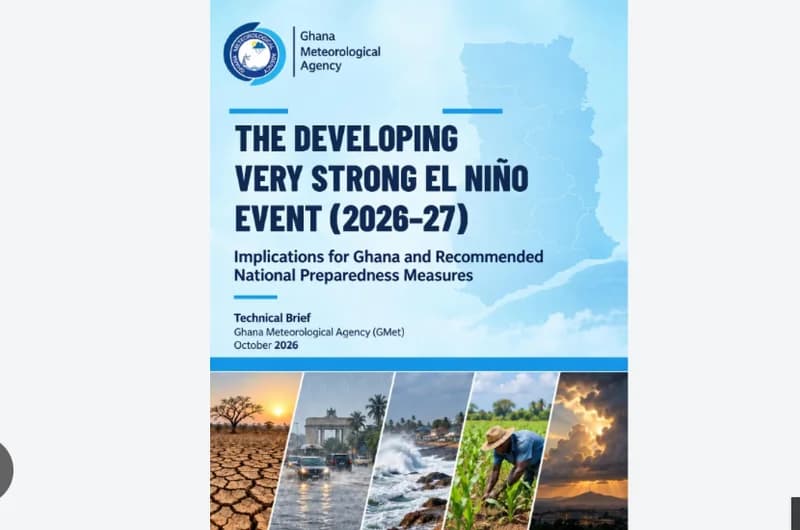
The Ghana Meteorological Agency (GMet) has called for immediate and coordinated national action to mitigate the impacts of a "very strong" El Niño event expected to persist until early 2027. In a technical brief issued to various ministries, the agency emphasized the need for cross-sectoral interventions to safeguard the country’s food security, public health, water resources, and electricity supply. The warning comes as global climate data indicates that 2026 is on track to be the second-hottest year on record, driven largely by the intensifying El Niño phenomenon.
According to recent meteorological data, the first ten months of 2026 have already marked the hottest period ever recorded globally. The average air temperature reached 15.30°C, which is 0.64°C above the 1991-2020 average. A particularly notable spike occurred in August 2026, which became the hottest August ever recorded with temperatures hitting 16.96°C. For Ghana, this trend translates into an anticipation of significantly warmer temperatures and unpredictable precipitation patterns in the coming months, posing a direct threat to rain-fed agriculture and hydroelectric power generation.
GMet has specifically urged the Ministry of Food and Agriculture and the Ministry of Health to lead targeted measures within their respective domains. The agency noted that the erratic weather could disrupt planting seasons and increase the prevalence of heat-related illnesses. Additionally, the brief highlighted the importance of robust energy management and local government preparedness to handle potential water shortages and increased demand on the national power grid. While GMet acknowledged some uncertainty regarding the exact severity and geographical distribution of these impacts, it stressed that proactive planning is essential to manage public expectations.
As world leaders prepare for the COP31 climate summit in Turkey, GMet continues to advocate for continuous monitoring and aggressive public awareness campaigns. The agency intends to provide regular early warnings to ensure that both the government and the general public are equipped to navigate the climate risks. By fostering a high level of national preparedness, GMet aims to minimize the socio-economic disruptions typically associated with extreme El Niño cycles, ensuring that critical infrastructure and livelihoods remain resilient through 2027.