••
Gifty Quaye urges standardized human rights training for Ghana Police
•2 min read•1 source
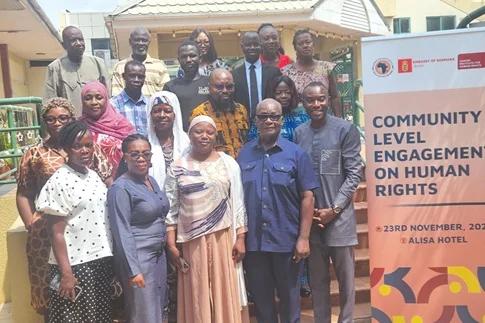
Gifty Quaye, a Deputy Director at the Ministry of the Interior, has called for the establishment of a standardized and sustainable human rights training manual for the Ghana Police Service. Speaking at a community engagement event in Accra organized by the African Security Sector Network (ASSN), Quaye emphasized that such a manual is vital for strengthening democratic governance. She noted that practical training in human rights is not just a legal requirement but a cornerstone for building public confidence in the nation's security institutions.
Quaye highlighted that the manner in which police officers handle their daily responsibilities directly influences how the public perceives the state's commitment to justice. She argued that professional policing must strike a balance between maintaining law and order and protecting the fundamental rights of citizens. According to the Deputy Director, a uniform training framework would ensure that every officer, regardless of location or rank, adheres to the same high standards of human rights protection during operations.
Supporting the call for reform, Major General Carl Coleman of the African Security Sector Network stressed that security sector improvements must be locally designed and inclusive to be effective. He suggested that for reforms to take root, they must reflect the specific needs and socio-political context of the Ghanaian environment. Dr. Emmanuel Sowatey added a layer of nuance, observing that public trust in the police is not uniform but varies across different community demographics. He noted that younger generations often have distinct experiences with law enforcement compared to older citizens, necessitating a more targeted approach to community relations.
To address these discrepancies, Dr. Sowatey advocated for the adoption of evidence-based policing, which would allow the Ghana Police Service to allocate its limited resources more effectively based on data and community feedback. The proposed manual and the broader engagement efforts aim to bridge the trust gap between the police and the public. By institutionalizing human rights education, the Ministry and its partners hope to foster a security environment where citizens feel protected rather than threatened by the agents of law enforcement.