••
GHS Launches GH¢35.4m Roadmap to Establish Public Health Emergency Operations Centres Nationwide
•2 min read•1 source
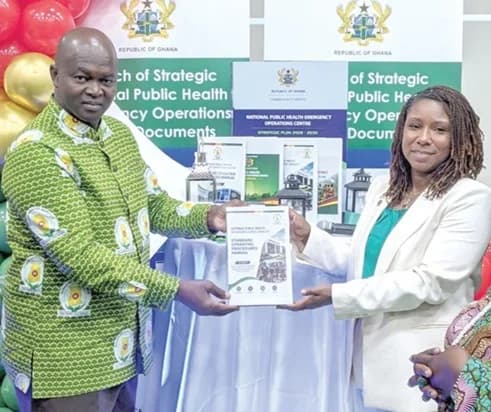
The Ghana Health Service (GHS) has taken a significant step toward fortifying the nation's health security by launching a comprehensive national roadmap and framework to establish Public Health Emergency Operations Centres (PHEOCs) across the country. This initiative, designed to create a unified coordination system for managing health crises at national, regional, and district levels, aims to bridge gaps in Ghana’s response infrastructure revealed by previous health emergencies. By decentralizing emergency management, the GHS intends to ensure that the country is better equipped to detect, assess, and respond to public health threats in a timely and efficient manner.
At the heart of this initiative are five key strategic documents, including the National PHEOC Strategic Plan 2026–2030 and the National PHEOC Handbook. These documents serve as the blueprint for the GHS's five-year mission to operationalize the emergency centres. GHS Director-General Dr. Samuel Kaba Akoriyea underscored the necessity of this coordinated approach, noting that a structured framework is vital for avoiding the fragmented responses seen during past outbreaks. The roadmap specifically addresses several pillars of emergency readiness, including governance structures, information and communication technology (ICT) integration, logistics management, and the continuous development of the public health workforce.
Implementing this ambitious national network is projected to cost approximately GH¢35.4 million over the next five years. This investment will cover the technical and physical infrastructure required to make the PHEOCs functional, ensuring that every level of the health system—from the national headquarters to the most remote districts—can communicate and coordinate during a crisis. The project emphasizes the importance of data-driven decision-making and real-time monitoring, which will be facilitated by the new ICT frameworks being put in place to streamline reporting and response times.
The launch event also served as a platform to acknowledge the international partnerships that have bolstered Ghana’s disease preparedness efforts. The GHS bid farewell to Dr. Danielle Barradas of the U.S. Centers for Disease Control and Prevention (CDC), recognizing her significant contributions to the country's public health landscape. As Ghana begins the implementation of the 2026–2030 strategic plan under the administration of President John Mahama, the focus remains on building a resilient healthcare system. The successful rollout of these PHEOCs is expected to significantly reduce the impact of public health emergencies on both the Ghanaian population and the national economy.
Related topic
John Mahama: Latest News & Updates →
