••
Ghana Senior High School wins agri-challenge with automated solar dryer
•2 min read•1 source
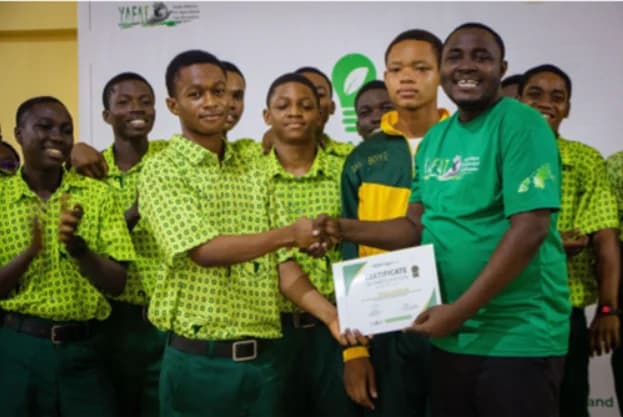
Team Gamma from Ghana Senior High School (GHANASS) has emerged as the winner of the 2026 Youth Agri-Innovation Challenge. The students secured the top prize after developing a sophisticated automated solar dryer designed to tackle the persistent issue of post-harvest losses in Ghana’s agricultural sector. The victory was announced during the AgriFair, an event organized by YAFAT to showcase youth-led solutions for sustainable farming and food security.
The innovation developed by the GHANASS team addresses a critical gap in the agricultural value chain. In many parts of Ghana, farmers lose a significant portion of their harvest due to inadequate storage and processing facilities. The team’s solar dryer is specifically engineered to mitigate these losses by providing a controlled environment for moisture removal. Unlike traditional open-air drying, which exposes crops to dust, pests, and unpredictable weather, this automated system ensures a cleaner and more uniform drying process, thereby increasing the quality and market value of the produce.
The solar-powered nature of the device makes it an ideal solution for off-grid farming communities. By removing the dependency on the national grid, the students have created a tool that is both accessible and environmentally friendly. The automation components further enhance the dryer’s utility, as sensors can monitor conditions to optimize drying times without constant manual supervision. This level of technology is often reserved for large-scale industrial equipment, but the students successfully adapted the concept into a format suitable for rural smallholder farmers.
This achievement highlights the growing potential of Ghanaian youth to contribute to national development through technological innovation. Beyond the competition, Team Gamma’s project promotes environmental sustainability by leveraging renewable energy to solve practical economic problems. As Ghana continues to seek ways to modernize its agricultural sector, such student-led initiatives provide a blueprint for low-cost, effective interventions that can improve the livelihoods of farmers and reduce waste within the national food supply chain.