••
Veterinary Services Department Launches Free Rabies Vaccination Campaign Amid Calls for Integrated "One Health" Approach
•3 min read•2 sources
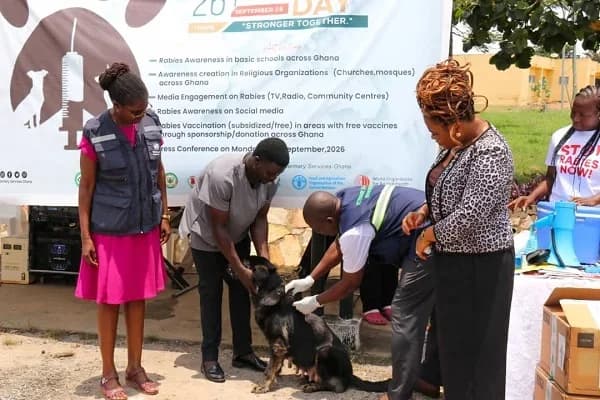
Ghana has officially launched a major public health initiative to vaccinate 25,000 dogs and cats in high-risk areas, marking a significant step toward the national goal of eliminating human deaths from dog-mediated rabies by 2030. Initiated as part of World Rabies Month in September 2026, the campaign provides free vaccinations throughout the month to curb the spread of this fatal zoonotic disease. The Veterinary Services Department (VSD) is spearheading the exercise, emphasizing that protecting animal health is the primary line of defense for human safety.
Dr. Emmanuel Allegye-Cudjoe of the VSD highlighted the critical nature of the exercise, urging pet owners to ensure annual vaccinations and to report all animal bites to health facilities immediately. To maximize reach, the government is amplifying public education through schools, religious institutions, and community forums, with informational materials produced in multiple local languages. This grassroots engagement is designed to build a robust early warning system, ensuring that potential outbreaks are identified and contained before they escalate into national crises.
This practical intervention comes at a time when health experts are advocating for a more comprehensive "One Health" framework in Ghana. The One Health model argues that human health cannot be viewed in isolation; rather, it is inextricably linked to animal and environmental health. Currently, Ghana’s response to disease outbreaks is often fragmented, with veterinary, health, and environmental professionals working in silos. Advocates from high-ranked sources stress that the next major disease outbreak cannot be fought alone, requiring joint surveillance systems and shared laboratory facilities to improve efficiency and response times.
While structural frameworks for One Health already exist within Ghana, experts warn that consistent political and financial commitment is required to transform these plans into a functional reality. The urgency of this integration is further heightened by climate change, which continues to alter disease transmission patterns and increase the frequency of zoonotic spillovers. Without dedicated investment and the breakdown of institutional barriers, the nation remains vulnerable to delays and inefficiencies that have characterized past health emergencies.
Ultimately, the success of initiatives like the rabies vaccination campaign depends on a shift in national health policy toward proactive prevention rather than reactive management. By fostering collaboration across disciplines and encouraging active citizen participation, Ghana aims to build a resilient health system capable of addressing the complex intersections of animal welfare and public safety. As the September campaign rolls out, officials are calling for sustained support from non-governmental organizations and the private sector to expand these efforts beyond high-risk zones to every corner of the country.