••
Ghanaian Tourism Sector Navigates Digital Transformation Through Artificial Intelligence and Virtual Reality
•2 min read•1 source
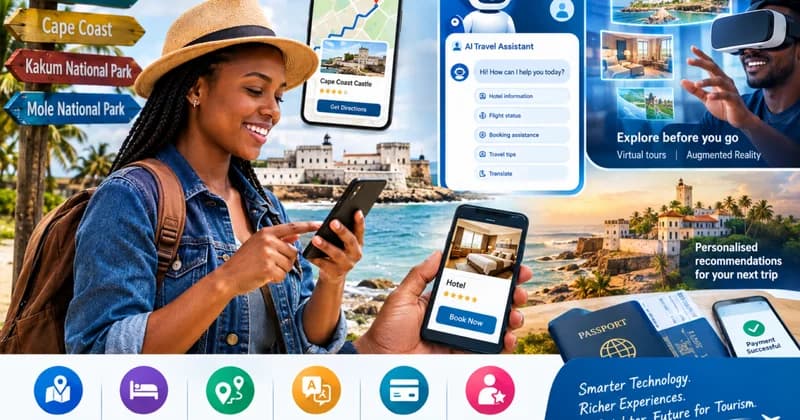
The tourism industry is undergoing a profound structural shift as technology and artificial intelligence (AI) redefine how travelers plan, experience, and document their journeys. According to insights from the Ghana Tourism Authority, the traditional reliance on physical travel agents and printed guidebooks has largely been superseded by a digital-first approach. Today's tourists increasingly utilize mobile applications and sophisticated AI-driven platforms to manage their itineraries, reflecting a global trend toward instant, data-driven travel management that prioritizes convenience and speed.
Central to this transformation is the integration of immersive technologies such as Virtual Reality (VR) and Augmented Reality (AR), which allow potential visitors to explore destinations digitally before making financial commitments. These tools, alongside AI chatbots, provide personalized experiences and real-time information that were previously unavailable. By offering virtual tours and interactive digital overlays, tourism stakeholders are able to engage audiences more deeply, effectively bridging the gap between digital discovery and physical exploration.
However, the rapid adoption of these digital tools brings significant challenges, particularly regarding data privacy and cybersecurity. As travelers share more personal information with AI systems and mobile apps to receive tailored recommendations, the industry faces the urgent task of securing this data against potential breaches. The Ghana Tourism Authority emphasizes that the future of the sector depends on the responsible integration of technology, ensuring that innovation does not come at the expense of consumer safety.
Ultimately, the successful evolution of the tourism landscape will require a balanced approach where businesses and regulators work together to implement robust security frameworks. As the industry continues to adapt, the focus remains on leveraging AI to improve service delivery and operational efficiency while maintaining the human-centric nature of travel. The ongoing digital revolution is not merely an upgrade of tools but a complete reimagining of the relationship between the traveler and the destination in an increasingly connected world.