Anansi News
HomeBriefsAsk GhanaTopicsTools
•
•

Stay Informed

Get AI-curated news briefs from Ghana delivered to your inbox every morning. Free forever, no spam.

Explore

  • Home
  • Briefs
  • About

Categories

  • Politics
  • Business
  • Sports
  • Entertainment
  • Africa

Features

  • Analysis
  • Cedi Rates
  • Dollar to Cedi
  • Ghana Gold Price
  • BoG Policy Rate

Topics

  • Armed Forces Recruitment
  • WAEC Results & News
  • Nana Ama McBrown
  • NDC News
  • All Topics

Legal

  • Privacy Policy
  • Terms of Service
Anansi News© 2026. All rights reserved.
Made withfor Ghana
politics

Ghana's Small Arms Commission Urges Parents to Avoid Toy Guns Amid Violence Concerns

28th January•1 min read•5 sources
Ghana's Small Arms Commission Urges Parents to Avoid Toy Guns Amid Violence Concerns
  1. Home
  2. /Politics
  3. /Ghana's Small Arms Commission Urges Parents to Avoid Toy Guns Amid Violence Concerns

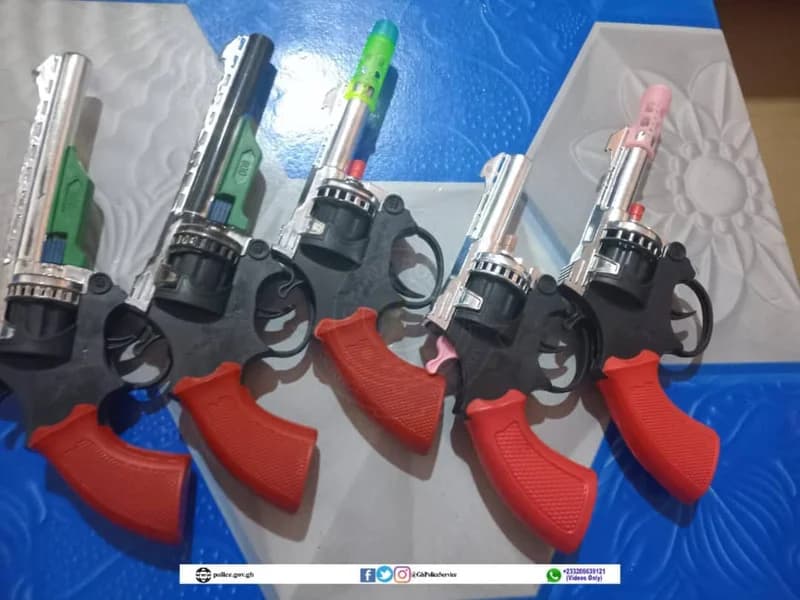
The Ghana National Commission on Small Arms and Light Weapons has issued a strong warning to parents against purchasing toy guns for their children, particularly during the festive season. This advisory follows a troubling incident in the Amansie Central District, where police confiscated a real firearm from a 15-year-old boy, resulting in a fatal clash. Mr. Gyebi Asante, Deputy Director of the Commission, expressed concerns that toy guns could normalize violence among children, potentially leading them to mistake real firearms for toys. He emphasized the importance of fostering a safe environment for children by opting for non-violent toys and promoting responsible gun ownership practices. Additionally, he called on licensed gun dealers to strictly adhere to regulations to prevent children from accessing firearms. The Commission's message highlights the urgent need to prioritize child safety and mitigate risks associated with gun violence in society.

Our Take

From the Team

Coming Soon

Our team will add key insights, trends, and actionable takeaways to help you stay informed faster.

This story touches markets covered on Anansi Intelligence ↗.

More from politics

Continue exploring similar stories

Mahama Administration Pushes Agricultural Revival and Accountability Amid Regional Development Friction
politics|Yesterday

Mahama Administration Pushes Agricultural Revival and Accountability Amid Regional Development Friction

The administration of President John Mahama is intensifying its efforts to drive economic growth through innovative agricultural policies and increased local accountability, according to several government reports and public forums held across the country in 2026. Vice President Professor Jane Naana Opoku Agyemang, speaking at the Meko Bono Homecoming and Festival in Atebubu, recently assured farming communities in the Bono East Region of the government's commitment to minimizing post-harvest losses through the 'Feed Ghana' programme. This initiative is designed to improve agricultural productivity and support sustainable development in the region. In a related and notable policy shift, the Minister of Trade, Agribusiness and Industry, Elizabeth Ofosu-Adjare, has been advocating for the regulated cultivation of cannabis for medicinal purposes. Framing the initiative as a 'Christian endeavor,' the Minister emphasized that cannabis processing could play a critical role in medical treatment and healing, marking a significant move toward diversifying Ghana's industrial sector. However, these national initiatives have been met with intense partisan scrutiny and regional friction. In the Oti Region, a sharp dispute has emerged over the 'Nkoko Nkitinkiti' poultry initiative. The Oti Regional Communication Director of the New Patriotic Party (NPP), Mr. Seidu Musah, alleged that the region received only 810 birds, which he claimed were distributed primarily to members of the National Democratic Congress (NDC). This claim was swiftly debunked by the NDC's Williams Ntoso, who asserted that the government actually distributed 90,000 birds across nine assemblies to bolster local livelihoods. These conflicting reports highlight the deep partisan divide that continues to shape public perception of government performance, a trend corroborated by recent Afrobarometer data indicating that political affiliation profoundly influences how Ghanaians perceive the health of their democracy. In the Central Region, the government is attempting to bridge this perception gap through public accountability forums. Central Regional Minister Ekow Panyin Okyere Eduamoah pledged to collaborate closely with Metropolitan, Municipal, and District Chief Executives (MMDCEs) to enhance regional development. During a forum in Twifo Hemang, officials highlighted infrastructure improvements and urged residents to support community initiatives. Conversely, youth groups in the Upper East Region have expressed frustration over what they describe as 'snail-paced' development. Represented by Nicholas Azebire of Activista Ghana, the youth cited persistent inadequacies in road infrastructure, healthcare, and employment, calling on the Regional Minister and local MPs to prioritize job creation and stalled projects to prevent regional stagnation. Beyond economic and regional concerns, the administration is also focusing on the pillars of democratic governance and social empowerment. Felix Kwakye Ofosu, Minister of State for Government Communications, recently emphasized the vital collaboration between politics and journalism at the Ghana Journalists Association’s 77th Anniversary Symposium. He noted that such partnerships are essential for voter education and holding state actors accountable. On the grassroots level, NDC Women’s Organiser hopeful Xornam Favour Alayi-Hussey has outlined a vision to equip women in Ketu South with skills in AI, IT, and agribusiness to ensure they thrive in the modern economy. These developments, ranging from high-level policy shifts to local infrastructure disputes, underscore the complex challenges facing the Mahama administration as it seeks to balance national development goals with regional demands and partisan accountability.

US Federal Court Reverses Immigrant Visa Ban Affecting Ghana as Global Trade and Peace Negotiations Intensify
politics|Yesterday

US Federal Court Reverses Immigrant Visa Ban Affecting Ghana as Global Trade and Peace Negotiations Intensify

In a significant legal victory for international travelers and human rights advocates, U.S. District Judge Jeannette Vargas has struck down a Trump administration policy that suspended immigrant visa processing for 75 nations, including Ghana and 25 other African countries. The ruling, delivered in the Southern District of New York, described the suspension as "patently unlawful" and an overreach of executive authority. The court found that the policy violated federal immigration law by prohibiting visas based primarily on nationality. While the U.S. State Department had justified the ban by citing potential "public charge risks," the court's decision effectively reinstates the visa process, providing relief to thousands of applicants across Africa, Latin America, and South Asia. Simultaneously, North American diplomatic relations have entered a period of high tension as Canadian Prime Minister Mark Carney suspended trade negotiations with President Donald Trump. Carney denounced recent U.S. tariffs on Canadian goods as a "miscalculation" intended to provoke division, asserting that Canada would defend its economic sovereignty with dollar-for-dollar retaliatory tariffs on steel, dairy, and other products starting September 8. The collapse of these talks has already resulted in a 78% decline in U.S. wine exports to Canada and has raised serious concerns regarding the long-term stability of the U.S.-Mexico-Canada Agreement (USMCA). On the African continent, progress is being made toward regional stability and historical justice. In Switzerland, the Democratic Republic of Congo (DRC) and the M23-led rebel alliance reached a new roadmap for peace negotiations aimed at ending the protracted conflict in the country's mineral-rich eastern regions. The agreement includes specific timelines for a ceasefire and the establishment of a verification mission in South Kivu to monitor adherence to the terms. This diplomatic breakthrough follows a framework established in Doha and underscores a renewed commitment to resolving internal displacement and security threats through structured dialogue. Furthering Africa's diplomatic agenda, Ghana’s Foreign Affairs Minister Samuel Okudzeto Ablakwa clarified the objectives of the continent’s reparatory justice campaign during a recent address in Moscow. Ablakwa emphasized that the movement is not merely a request for cash payments but a call for meaningful policy support and investment in African youth to address the lasting scars of the transatlantic slave trade. Acknowledging the UN resolution that defined the slave trade as a crime against humanity, Ablakwa highlighted Ghana’s leadership in advocating for historical corrections that empower the continent's future generations. Together, these global developments illustrate a complex landscape of legal challenges, shifting trade alliances, and a proactive pursuit of peace and justice.

Interior Minister Muntaka Mohammed-Mubarak Outlines Massive Tech Overhaul and Enforcement Drive for National Security
politics|Yesterday

Interior Minister Muntaka Mohammed-Mubarak Outlines Massive Tech Overhaul and Enforcement Drive for National Security

Interior Minister Muntaka Mohammed-Mubarak has unveiled a comprehensive plan to modernize Ghana’s security infrastructure, headlined by the deployment of over 700 digital enrolment stations across the country by the end of 2026. Speaking at the Police Regional Command Conference in Accra, the Minister emphasized that these stations are central to the government’s strategy to strengthen intelligence-led policing and improve criminal investigations. This initiative, alongside the TRAFITECH automated road traffic enforcement system and the National Criminal Automated Biometric ID System, signals a major shift toward a technology-first approach in maintaining law and order under the Mahama administration. The Inspector-General of Police (IGP), Christian Tetteh Yohuno, joined the Minister in calling for increased professionalism and accountability among regional commanders to match these technological advancements. While the central government focuses on high-tech tools, local successes are already being reported through community-based initiatives. In Kintampo, the outgoing Municipal Police Commander, ACP Nana Kofi Ghampson, noted that highway robberies have significantly declined due to robust stakeholder collaboration and community policing. He urged his successor, Chief Superintendent Kwabena Ofori Boateng, to maintain these vital civilian relationships to ensure the continued safety of the municipality. Parallel to these physical security measures, the Data Protection Commission (DPC) has declared 2026 as the "Year of Enforcement" to safeguard the nation’s digital borders. Deputy Minister of Communications, Mohammed Adams Sukparu, recently handed over new pickup vehicles to the DPC to facilitate regional expansion. Executive Director Dr. Arnold Kavaarpuo stated that these resources will support rigorous field operations to ensure institutions comply with the Data Protection Act. By prioritizing the protection of sensitive health and children's records, the DPC is treating data security as a core component of national security to combat identity theft and unauthorized access. The security sector is also seeing significant leadership transitions aimed at strengthening regional stability and naval operations. At the Sekondi Naval Base, Commodore Stephen Billings Nyam has officially assumed office as the Flag Officer Commanding (FOC) of the Western Naval Command, succeeding Commodore Samuel Ayelazono. These administrative updates and technological investments represent a multi-faceted effort by the government to enhance the effectiveness of the Ghana Police Service, the Navy, and data regulatory bodies, ensuring a more secure environment for citizens and businesses alike.

Dr. Cassiel Ato Forson to Detail ‘New Economy’ in 2027 Budget Amid CSO Calls for Job Creation and Fiscal Discipline
politics|Yesterday

Dr. Cassiel Ato Forson to Detail ‘New Economy’ in 2027 Budget Amid CSO Calls for Job Creation and Fiscal Discipline

Finance Minister Dr. Cassiel Ato Forson is set to present the 2027 Budget Statement and Economic Policy to Parliament in November, centering on a proposed ‘New Economy’ program designed to accelerate development and stabilize the national economy. Ahead of the presentation, a coalition of Civil Society Organisations (CSOs), including the Economic Governance Platform and the Tax Justice Coalition, has urged the government to pivot the fiscal policy toward aggressive job creation and enhanced revenue transparency. During a forum in Accra, these advocates emphasized that the administration must translate current macroeconomic stability into tangible welfare benefits for citizens, particularly through the closing of tax loopholes and more efficient management of mineral revenues. Key among the CSO recommendations is the establishment of a unified framework for managing mineral revenues and providing greater clarity on the financing of the Minerals Income Investment Fund. Experts have called for the budget to address the country's tax-to-GDP ratio, which currently stands at 13%, with an ambitious target of 18% by 2027. To achieve this, the Tax Justice Coalition is advocating for stronger actions against illicit financial flows and the introduction of incentives to foster voluntary tax compliance among consumers. Additionally, there is a push to integrate the artisanal and small-scale mining sectors more effectively into the national fiscal framework to bolster domestic revenue mobilisation. In tandem with these budgetary preparations, the government is intensifying its enforcement of public financial management laws. The Controller and Accountant-General’s Department (CAGD) has issued a stern warning to ministries, departments, agencies (MDAs), and public institutions against the operation of unauthorized bank accounts. The directive prohibits opening accounts with the Bank of Ghana or commercial banks without prior written authorization, signaling a broader effort to ensure strict oversight and prevent the fragmentation of public funds as the 2027 fiscal year approaches. The political and labor landscape, however, is clouded by the recent passing of Dr. Isaac Bampoe Addo, the Executive Secretary of the Civil and Local Government Staff Association of Ghana (CLOGSAG). Dr. Addo, who died on August 21, 2026, was a pivotal figure in labor relations and a fierce advocate for workers' welfare. The Fair Wages and Salaries Commission (FWSC) described his death as a major loss to organized labor and the public service. Dr. George Smith-Graham, Chief Executive of the FWSC, praised Dr. Addo’s intellect and his significant contributions to the formation of the Independent Public Emoluments Commission (IPEC). As the Mahama administration prepares its 2027 financial roadmap, the government faces the dual challenge of meeting high expectations for job creation while maintaining the fiscal discipline demanded by oversight bodies. The upcoming budget will serve as a critical test of the ‘New Economy’ vision, requiring the government to balance aggressive development goals with the need for transparency and stable labor relations in the wake of losing one of the most formidable voices in the public sector.

All
africa
business
education
entertainment
health
news
politics
sports
technology