••
Ghana Launches Geophysical Research Initiative as Severe Dry Spell Threatens Maize Production in Sissala Districts
•2 min read•2 sources
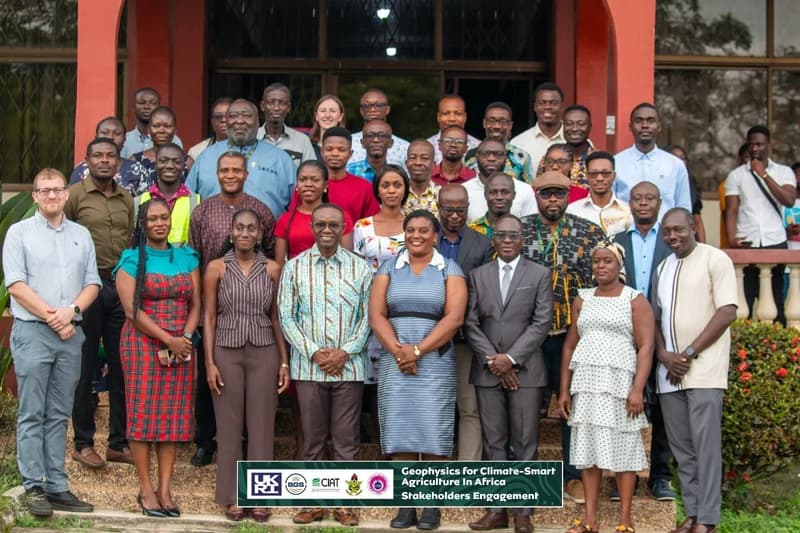
Ghana's agricultural sector is facing a dual reality as researchers launch a sophisticated climate-resilience project while farmers in the Sissala East and West districts grapple with a devastating dry spell. The 'Geophysics for Climate-smart Agriculture in Africa' project, which commenced in April 2026 and will run through March 2028, seeks to address the exact type of climate-induced weather variability currently threatening the nation's food security. As researchers gather to dialogue on technological solutions, hundreds of acres of maize and soybean crops are reportedly withering in the fields, highlighting the urgent need for sustainable agricultural interventions.
In the Sissala East and West districts, a prolonged lack of rainfall since early August has left farmers in a state of distress. Despite significant investments in seeds and labor, key food crops have begun to turn yellow and dry up due to inadequate moisture since the season began in May 2026. Environmental conservationist Fataw Ayamga has warned that if the dry conditions persist, the region faces a national food insecurity crisis that could lead to soaring grain prices and severe financial losses for households that depend entirely on farming. Local producers have issued an urgent appeal for government assistance to mitigate the impact of what they describe as an increasingly unpredictable climate.
In response to these systemic challenges, the CSIR-Crops Research Institute, in collaboration with the British Geological Survey and Kwame Nkrumah University of Science and Technology (KNUST), is spearheading the Geophysics for Climate-smart Agriculture initiative. Funded by UK Research and Innovation (UKRI), the project introduces low-cost electrical resistivity tomography (ERT) and other soil-sensing technologies. These tools are designed to monitor soil water dynamics and greenhouse gas emissions in real-time, providing farmers and policy-makers with the data needed to adopt more resilient agricultural practices and improve water security across sub-Saharan Africa.
Dr. Stephen Yeboah of the CSIR-Crops Research Institute emphasized that the project relies on a participatory approach, ensuring that local stakeholders are involved in the development and adoption of these findings. Beyond immediate soil monitoring, the initiative aims to build local capacity by developing open-source instruments and training early-career researchers in the field of geophysics. By bridging the gap between high-level research and on-the-ground farming, stakeholders hope to create a sustainable ecosystem that can withstand the heightening pressures of climate change and prevent future crop failures like those currently seen in northern Ghana.
