••
Ghana Russia Centre signs ICT cooperation deal with Moscow university
•2 min read•1 source
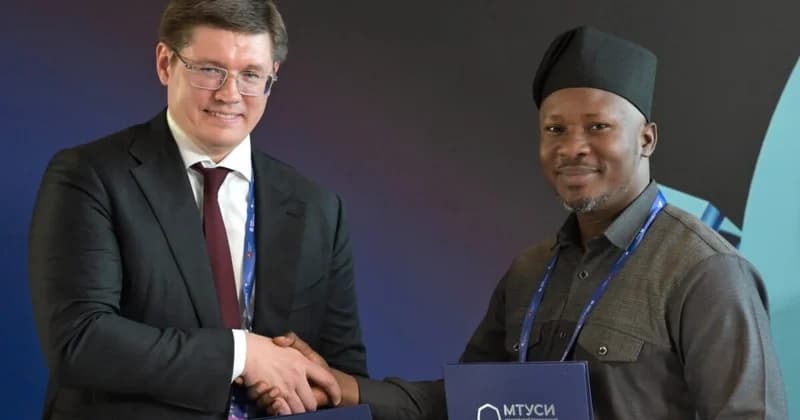
The Ghana Russia Centre for Commerce and Relations has formalised a strategic partnership with the Moscow Technical University of Communications and Informatics (MTUCI) to advance digital technology and education. Signed during the Global Digital Forum 2026, the cooperation agreement establishes a framework for merging Russian technological expertise with Ghana’s growing digital economy. The partnership is designed to facilitate a wide range of collaborative efforts, including academic exchanges, specialised skills training, and the development of joint technological projects.
John Aggrey, CEO of the Ghana Russia Centre, emphasised the significance of the agreement, particularly its focus on high-level infrastructure such as satellite communications and space technology. By leveraging Russian advancements in these fields, Ghana aims to significantly enhance its domestic capabilities in critical sectors. Specifically, the integration of satellite data and space-based solutions is expected to provide transformative improvements in agricultural precision, national security monitoring, and climate change mitigation efforts.
The collaboration also places a heavy emphasis on human capital development within the ICT sector. Through the partnership with MTUCI, Ghanaian students and professionals are expected to gain access to advanced technical training and academic programmes developed within the Russian educational system. This exchange is intended to bridge existing skills gaps in the local workforce and foster a new generation of Ghanaian tech experts capable of managing sophisticated digital infrastructure.
Looking ahead, both parties have initiated discussions regarding the organisation of a dedicated Russia-Ghana ICT Forum scheduled for 2027. This upcoming event is intended to serve as a platform for showcasing Ghanaian digital innovations to an international audience while creating a venue for further investment opportunities. The forum aims to solidify the relationship between the two nations' technology sectors, ensuring that the current agreement serves as a foundation for long-term industrial and economic cooperation.


