••
Ghana Police Postpone TRAFFITECH-GH Rollout as Authorities Intensify Nationwide Road Safety Reforms
•2 min read•9 sources
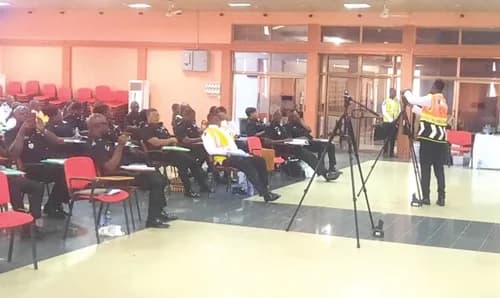
The Ghana Police Service (GPS) has announced a one-month postponement of the full implementation of its landmark automated traffic law enforcement system, TRAFFITECH-GH, shifting the launch from October 1 to November 1, 2026. This delay, confirmed by the Motor Traffic and Transport Department (MTTD), is intended to facilitate an intensive nationwide public education campaign to ensure motorists and vehicle owners are fully aware of the new digital monitoring procedures. According to Chief Superintendent Alexander Kwaku Obeng, the police have established robust back-office systems and specialized teams to manage the transition from traditional manual enforcement to a technology-driven approach aimed at curbing road accidents.
Once operational, the TRAFFITECH-GH system will utilize a network of high-tech cameras, radar, and sensors to detect violations such as speeding and running red lights. The system is designed to streamline enforcement by automatically capturing infractions and sending Electronic Notices of Violation (ENV) directly to vehicle owners via SMS. Verified offenders will have the option to pay fines through designated electronic platforms or contest the charges in court. While the initiative will initially focus on speeding infractions, authorities plan to integrate other traffic offenses into the automated system over time to complement existing manual patrols.
In tandem with the police initiative, the Driver and Vehicle Licensing Authority (DVLA) has launched a pilot program for new Radio Frequency Identification (RFID)-enabled number plates. These advanced plates feature a redesigned structure that excludes the year of registration and incorporates enhanced security features to improve vehicle identification and tracking. Simultaneously, the Accra Metropolitan Assembly (AMA) is intensifying its regulatory oversight by directing all commercial drivers with yellow registration plates to obtain official commercial driver’s licenses. Head of Public Affairs Gilbert Nii Ankrah noted that these licenses, priced at GH¢60 for new applicants and GH¢23 for renewals, are essential for ensuring compliance with the assembly's 2017 by-laws.
These institutional reforms are being supported by internal changes within the Ghana Private Road Transport Union (GPRTU), which has empowered station masters to conduct rigorous vehicle inspections. Under this new directive, all commercial vehicles must undergo strict vetting—including checks of brakes, tyres, and lights, as well as test drives—before being cleared to operate from GPRTU stations. This multi-agency approach, ranging from high-tech police surveillance to localized union inspections, underscores a unified national effort to instill discipline on Ghanaian roads and reduce the prevalence of preventable accidents through shared responsibility.


