••
National Security Council Secretariat reviews 2020 National Security Strategy
•2 min read•2 sources
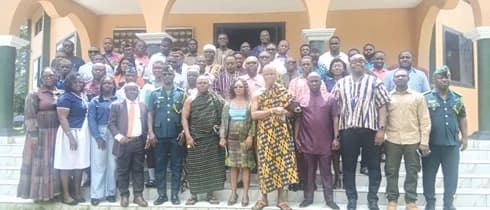
The National Security Council Secretariat (NSCS) has launched a series of regional consultations to review the 2020 National Security Strategy and develop a new framework for 2026. These engagements, recently held in Sefwi Wiawso in the Western North Region and Bolgatanga in the Upper East Region, seek to gather grassroots input to ensure the country’s security architecture remains responsive to evolving internal and external threats. The move is part of a broader mandate to update national security protocols to reflect changing global and local dynamics.
Speaking at the forums, Dr. Bako Mohammed emphasized that the revision is necessary to address emerging challenges that have gained prominence since the last strategy was implemented. These include the rise of violent extremism in the sub-region, the persistence of illegal mining, and the growing threat of cybercrime. Dr. Mohammed noted that the 2026 document will shift toward a more human-centered approach, focusing not just on state stability but on the safety and well-being of individual citizens within their communities.
In the Upper East Region, the consultations took on additional urgency due to the region's proximity to the borders of Burkina Faso and Togo. Stakeholders, including security agencies, civil society organizations, and local government officials, discussed the need for a coordinated approach to prevent the spillover of terrorist activities. The Upper East Regional Minister underscored that effective national security depends on local intelligence and community cooperation, urging participants to provide practical suggestions that reflect the specific vulnerabilities of border communities.
The Western North engagement similarly focused on the intersection of environmental degradation and national stability, with a particular emphasis on the security implications of illegal mining. Dr. Mohammed highlighted that the participation of diverse groups—including traditional leaders and the media—is essential for fostering a sense of collective responsibility. The insights gathered from these regional tours will be synthesized into a draft document, ensuring that the 2026 National Security Strategy is both comprehensive and inclusive of the diverse concerns across Ghana's administrative regions.


