••
Future of Energy Conference Confronts Ghana's Northern Access Gap and Africa's $5 Billion Renewable Goal
•3 min read•3 sources
The 2026 Future of Energy Conference in Accra has brought a sharp focus to the stark contrast between Ghana’s national electricity achievements and the persistent energy poverty in its northern regions. While Ghana boasts a national electricity access rate of approximately 90%, Bismark Adongo Ayorogo, Coordinator of the Northern Patriots in Research and Advocacy (NORPRA), revealed that many northern communities still struggle with access levels as low as 60% to 70%. This disparity served as a microcosm for a broader continental challenge discussed at the event, where experts noted that of the 660 million people globally without electricity, 600 million reside in Africa.
Addressing the gathering, Ayorogo emphasized that bridging this gap requires more than just rhetoric; it necessitates a massive injection of capital into deprived areas. Ghana’s existing Renewable Energy Master Plan carries an estimated price tag of $5 billion, yet it currently lacks sufficient public funding to meet its targets. Ayorogo called on the government to move beyond conference discussions and implement practical, actionable commitments to ensure equitable energy distribution. He commended the Africa Centre for Energy Policy (ACEP) for convening the dialogue but stressed that the energy poverty in the north remains a significant barrier to the region’s socio-economic development.
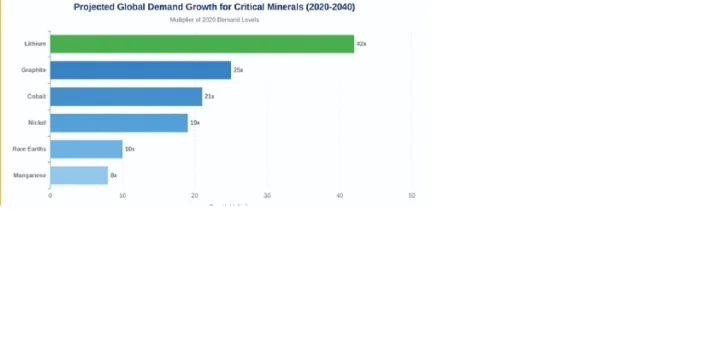
Beyond Ghana's borders, the conference highlighted Mission 300, a bold initiative aiming to provide electricity access to at least 300 million Africans by 2030. Dr. Emmanuel Victor Brown, CEO of Civil Society for AfCFTA, praised the event for aligning with the United Nations Sustainable Development Goals and the principle of leaving no one behind. Dr. Brown noted that Africa is uniquely positioned to lead the global clean energy narrative through its vast reserves of critical minerals—such as cobalt in the Democratic Republic of Congo and platinum in South Africa—which are essential for battery value chains and energy storage technologies.
The discussions also touched upon the outcomes of the May 2026 Africa Forward Summit, which warned against a new green dependency. To avoid repeating historical patterns of raw resource extraction, participants argued that African nations must develop strategic policies focused on local industrialization, technology transfer, and institutional capacity. The consensus from the Accra conference is clear: for Africa to capitalize on the global energy transition, it must transform its mineral wealth into domestic energy security and industrial growth. The success of these efforts will depend on whether governments can harmonize regional needs with global mandates to foster a sustainable and inclusive energy future.


