••
Ghana Faces Growing Scrutiny Over Narcotics Trafficking as Experts Demand Systematic Security Overhaul
•3 min read•17 sources
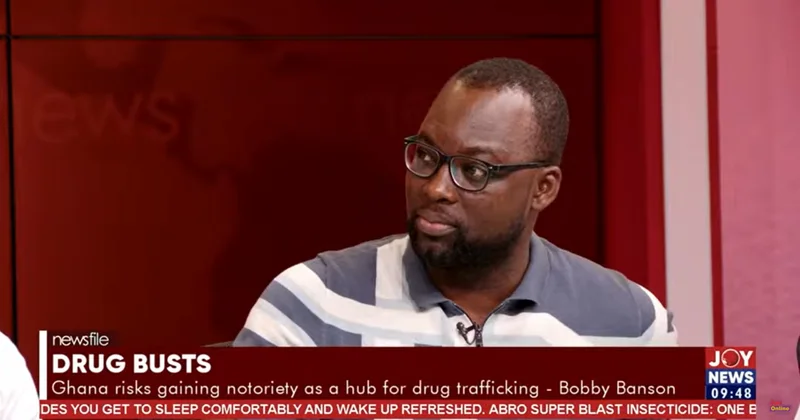
Ghana’s national security and international reputation are facing critical challenges following a series of high-profile narcotics seizures, most notably a 3.9-tonne cocaine shipment intercepted by French customs that originated from Ghana. Valued at approximately €225 million, the bust has triggered a national debate regarding the efficacy of the country's border controls and the potential for Ghana to be perceived as a preferred transit hub for international drug cartels. Security experts and legal practitioners are now calling on President John Mahama’s administration to move beyond political rhetoric and implement comprehensive, long-term strategies to secure the nation’s ports and borders.
Emmanuel Kotin, Executive Director of the Africa Centre for Security and Counterterrorism, has emphasized that drug trafficking must be treated as a continuous national security priority rather than a partisan issue. Speaking on GTV’s Current Agenda, Kotin highlighted significant weaknesses in airport and border screening processes, urging for a thorough review of security equipment and inter-agency cooperation. He further raised concerns about the potential links between organized crime and political financing, calling for investigations into how illicit funds might influence the political landscape. This sentiment is echoed by the Narcotics Control Commission (NACOC), which recently reported 217 arrests and the seizure of over 8.5 tonnes of various drugs, signaling the sheer scale of the illicit trade moving through the region.
Institutional gaps at Ghana’s ports have come under specific scrutiny, particularly regarding the scanning of containers. Alexander Twum-Barimah, Deputy Director-General of NACOC, revealed that current protocols often exclude narcotics-specific experts from the scanning rooms, leaving only Customs officers and Meridian Port Services (MPS) personnel to analyze images for abnormalities. Twum-Barimah is advocating for NACOC’s permanent inclusion in port inspection teams, arguing that specialized expertise is required to detect sophisticated concealment methods used by traffickers. He acknowledged that the commission is currently working to address "inherited operational gaps" to better integrate into Ghana's broader security framework.
The economic and reputational consequences of these security lapses are a growing concern for the legal and business communities. Lawyers Lenin Nicholas Anane Agyei and Bobby Banson have warned that if Ghana gains notoriety as a trafficking hub, legitimate exporters could face increased inspections, delays, and higher costs in international markets. Banson cautioned that Ghanaian travelers may also face heightened scrutiny and profiling at international airports, similar to the experiences of citizens from other high-risk nations. They urged the government to conduct regular evaluations of security systems to identify and seal the vulnerabilities currently being exploited by drug cartels.
In response to these developments, the government is reportedly forming an inter-agency task force dedicated to preventing drug trafficking. While 165 prosecutions are already underway, the focus is shifting toward proactive disruption of trafficking networks through intelligence-led operations. The success of these measures will be vital in preserving the integrity of Ghanaian exports and maintaining the trust of international partners, as the country seeks to distance itself from the influence of global organized crime.
Related topic
John Mahama: Latest News & Updates →

