••
Ghana Pursues $500 Billion Net-Zero Energy Goal by 2070 Amid Concerns Over Debt Sustainability
•2 min read•1 source
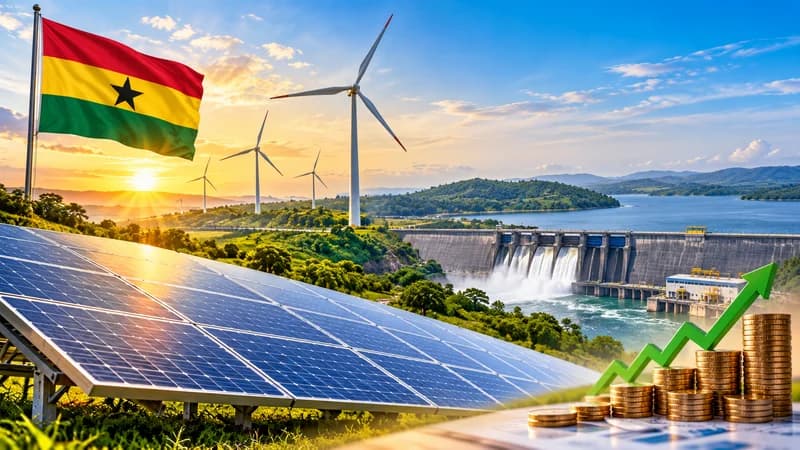
Ghana has set an ambitious target to achieve net-zero carbon emissions by 2070, a transformation estimated to require over $500 billion in financing. During a recent National Policy Dialogue in Accra, government officials and civil society leaders discussed the complex challenge of securing this massive investment without further burdening the national economy. Under the leadership of President John Mahama, the government is seeking a "just transition" that balances environmental commitments with fiscal responsibility, ensuring that green energy projects do not lead to unsustainable debt levels for future generations.
Key stakeholders, including Seth Mahu from the Ministry of Energy and John Nkaw of ActionAid Ghana, emphasized that the quality and terms of financing are as important as the quantity. The dialogue highlighted a growing concern among vulnerable nations that are often forced to prioritize debt servicing over climate action. To avoid this trap, experts called for an economy-wide approach that integrates renewable energy projects with broader economic development, job creation, and the enhancement of local value chains. The focus is shifting toward ensuring that the transition provides tangible benefits to the local workforce rather than relying solely on foreign expertise and equipment.
Practical initiatives are already underway to improve energy access and demonstrate the potential of renewables. These include the Solar Street Lighting Programme and various mini-grid projects specifically designed to reach underserved rural areas where electricity disparities remain significant. Furthermore, the government is exploring the establishment of a Renewable Energy Fund to mobilize capital and foster partnerships with international institutions. These efforts are intended to make clean energy affordable for all citizens while building a resilient infrastructure that can support long-term industrial growth.
The successful navigation of this transition will depend on Ghana's ability to maintain inclusive decision-making and prioritize local participation. As the country moves toward its 2070 goals, the focus remains on creating a sustainable financial framework that protects economic stability. By integrating financial planning with social equity, Ghana aims to set a precedent for how African nations can transition to green energy without sacrificing their economic sovereignty or deepening their debt burdens.
Related topic
John Mahama: Latest News & Updates →

