••
Ghana’s Higher Education Sector Navigates Governance Disputes, Leadership Transitions, and Curriculum Reforms
•3 min read•10 sources
Ghana’s higher education landscape is currently defined by a series of significant leadership transitions and governance challenges, most notably at the Kwame Nkrumah University of Science and Technology (KNUST). The university's Governing Council has sparked widespread controversy by abolishing the long-standing practice of faculty electing their own Deans and Pro-Vice-Chancellors, opting instead for a system of direct appointments. This move, which follows the recent investiture of a new Vice-Chancellor, has been met with fierce resistance from major staff unions including UTAG, GAUA, and TEWU-TUC. Critics argue that shifting power from the academic community to the central administration undermines democratic governance and risks repeating institutional crises, such as the unrest witnessed in October 2018. Unions are calling for immediate dialogue to restore trust and maintain the values of academic participation.
While KNUST faces internal friction, Bolgatanga Technical University has seen a resolution to its own leadership crisis through the judicial system. The High Court in Bolgatanga recently ruled that the removal of Professor Samuel Erasmus Alnaa as Vice-Chancellor was illegal, citing a lack of quorum during the Governing Council meeting that terminated his appointment. The court also invalidated the formation of the Special Investigative Committee involved in the process, resulting in the reinstatement of Prof. Alnaa and two other senior officers. This ruling underscores the critical importance of adhering to procedural and legal frameworks in the management of public universities.
In the private and specialized sectors, institutions are focusing on expansion and modernization. Frank B. Adu Jnr has been invested as the first Chancellor of the African University of Communications and Business (AUCB), following the institution's receipt of a presidential charter in December 2024. His five-point vision emphasizes digital transformation and industry-embedded education to prepare graduates for a technology-driven global economy. Similarly, Regentropfen University College (RUC) is looking toward the future, with President Rev. Dr. Moses Asaah Awinongya refuting false claims regarding the accreditation of its health programs. Dr. Awinongya clarified that the university currently offers 11 accredited programs and plans to establish a medical school within the next decade.
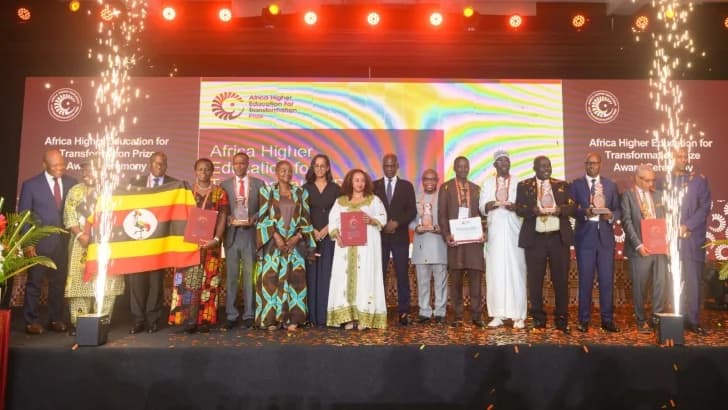
Broader educational reforms are also being championed by prominent national voices and international partners. At the University of Cape Coast (UCC), Chancellor Dr. Sam Esson Jonah has called for the integration of Osagyefo Dr. Kwame Nkrumah’s philosophies into the national curriculum, arguing that students should understand Nkrumah’s ideas on Pan-Africanism beyond mere monuments. Simultaneously, the Mastercard Foundation recently hosted the Higher Education Transformation Convening in Accra, bringing together African leaders to align curricula with industry needs. These initiatives, combined with new partnerships like the one between UCC’s new Vice-Chancellor, Professor Denis Worlanyo Aheto, and Prudential Bank, signal a concerted effort to enhance the sustainability and practical relevance of Ghanaian higher education.


