••
Ghana Government and IOM Repatriate 180 Nationals from Libya to Facilitate Social Reintegration
•2 min read•2 sources
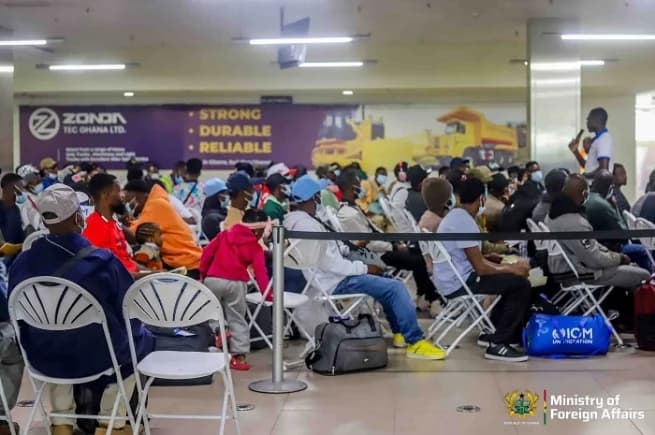
The Government of Ghana, in a coordinated effort with the International Organization for Migration (IOM) and the Economic Community of West African States (ECOWAS), has successfully repatriated 180 Ghanaian nationals from Libya. The group, which arrived on September 24, consists of 153 males and 27 females, including several children. This initiative is part of a broader humanitarian mission to rescue and support vulnerable Ghanaians who found themselves in precarious situations abroad, often as a result of irregular migration attempts.
Upon their arrival, the returnees were met by a high-level delegation including officials from the Ministry of Foreign Affairs, the National Disaster Management Organisation (NADMO), and ECOWAS representatives. The reception focused on ensuring the immediate needs of the returnees were met while providing a dignified homecoming. Government officials emphasized that the repatriation reflects the state's commitment to the welfare of its citizens, regardless of their location, and highlights the effectiveness of regional cooperation in managing migration challenges across the continent.
The returnees are being encouraged to view this transition as a fresh start and an opportunity for a "new beginning" within their home country. To facilitate a sustainable transition, the government and its international partners have pledged comprehensive assistance for reintegration into society. This support includes programs focused on skills development, vocational training, and entrepreneurship, aimed at helping the individuals rebuild their lives and contribute to the national economy instead of seeking dangerous routes abroad.
This recent repatriation exercise underscores the ongoing challenges of irregular migration and the risks faced by West African migrants in North Africa. By working closely with IOM and ECOWAS, the Ghanaian government continues to promote safe, orderly, and regular migration pathways. These efforts are intended not only to provide a safety net for those in distress but also to educate the public on the dangers of undocumented travel, encouraging potential migrants to seek legal and safer avenues for international mobility.