••
Ghana's Business Sector Expands Through Major Hospitality Investments, International Partnerships, and Digital Infrastructure Reforms
•3 min read•7 sources
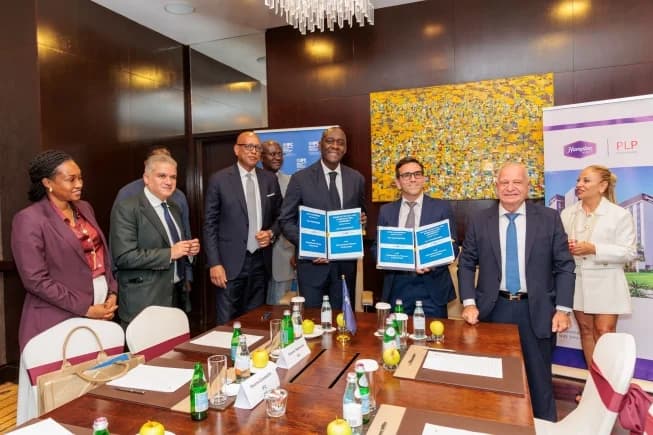
Ghana’s business landscape is witnessing a significant surge in international and diaspora investment, anchored by major new projects in hospitality and infrastructure. The International Finance Corporation (IFC) has announced long-term financing for PLP Properties Limited to develop a 170-room Hampton by Hilton hotel near the Accra International Airport. This flagship project, Hilton’s first in Ghana, is expected to create 990 direct and indirect jobs while targeting EDGE Advanced certification for environmental sustainability. Simultaneously, the Ghana Tourism Federation (GHATOF) is intensifying efforts to convert leisure interest into capital investment, specifically targeting the African American diaspora for opportunities in real estate, agriculture, and hospitality. This push for foreign direct investment is further bolstered by the Volta Regional House of Chiefs, which recently signed four strategic agreements with Chinese firms to enhance aquaculture, digital transformation, and infrastructure development in the Volta Basin.
To support this growing commercial activity, industry leaders are focusing on the modernization of financial and information infrastructure. Stanbic Bank and Graphic Business are convening regulators and business leaders to address bottlenecks in cross-border payments, advocating for the Pan-African Payment and Settlement System (PAPSS) to reduce transaction costs and delays that currently hinder international trade. On the local level, the emergence of digital directories, such as the Accra Street Directory and Modern Ghana’s Business Directory, is transforming how consumers and researchers interact with the market. These platforms aim to eliminate information fragmentation, providing the structured data necessary for business discoverability in an increasingly digital economy.
Despite these advancements in investment and infrastructure, a complex macroeconomic picture persists for the average Ghanaian. While national inflation has reportedly cooled to 5.0% as of August 2026, the cost of living in Greater Accra remains a challenge. Sharp increases in essential commodities—most notably a 158.3% rise in the price of fresh tomatoes—highlight a disconnect between falling statistical inflation and household affordability. Experts suggest that while the influx of capital and the adoption of modern payment systems are critical for competitiveness, long-term economic stability will require income growth that matches the rising cost structure of utilities and food services.
Ultimately, Ghana’s economic trajectory is being shaped by a dual approach of attracting high-value foreign projects while refining the internal digital and financial systems that facilitate trade. The success of initiatives like the Hampton by Hilton development and the Volta-China partnerships depends heavily on creating a seamless environment for money movement and data access. As the country positions itself as a hub for diaspora investment and regional trade, the focus remains on ensuring that macroeconomic improvements translate into tangible affordability for the local population and a more predictable environment for the burgeoning private sector.


