••
Ghana Health Service launches Ebola awareness campaign to prevent importation
•2 min read•2 sources
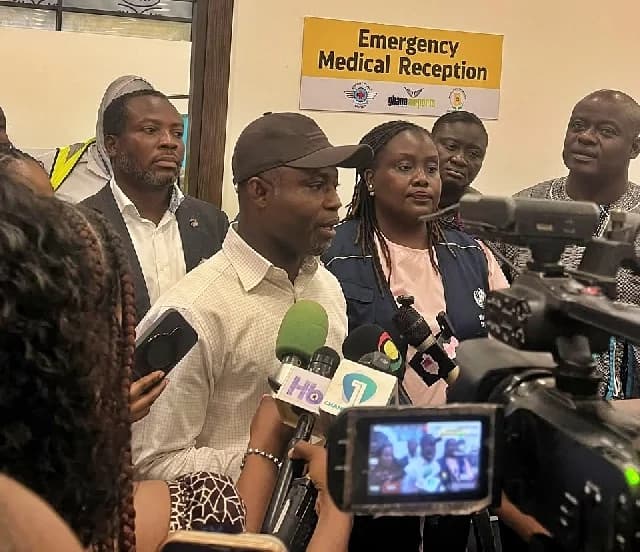
The Ghana Health Service (GHS) has launched a public awareness campaign to prevent the importation of the Ebola virus into the country following recent outbreaks in the sub-region. During a high-profile inspection of health facilities at Kotoka International Airport, the Minister for Health, Kwabena Mintah Akandoh, reassured Ghanaians that no cases have been recorded within the country to date. He emphasized that the government is prioritizing proactive prevention to safeguard the population, stressing that there is no need for panic as official surveillance systems are fully operational.
To bolster defense at the nation's primary gateway, the Ministry has introduced enhanced surveillance measures at Kotoka International Airport, including the installation of thermal scanners to monitor passenger temperatures. Passengers are now required to complete electronic health declaration forms to assist health officials in tracking potential risks. Minister Akandoh stated that health protocols would be strictly enforced for all travelers, including VIPs, without exception. The Minister also highlighted that laboratory capacity has been expanded and isolation centers prepared to ensure a swift response to any suspected cases.
Health officials are maintaining a high level of vigilance regarding the "budumbudju strain" of Ebola, which the Minister noted currently lacks an effective vaccine or specific treatment. As part of the GHS campaign, citizens are being educated on the importance of avoiding direct contact with the body fluids of infected persons. The GHS has advised that only trained healthcare professionals equipped with personal protective equipment should handle suspected cases. Anyone who believes they may have been exposed to the virus or is showing symptoms is urged to seek medical attention immediately.
The government has committed to providing the necessary financial resources to sustain these health security measures, with Minister Akandoh confirming that funding for Ebola surveillance will not be capped. He further refuted claims that Ghana is lagging behind its neighbors in its health response, asserting that the country’s preparedness is robust. By combining rigorous border screening with a nationwide education drive, the Ghana Health Service aims to maintain the country’s status as Ebola-free while ensuring the healthcare system is ready for any eventualities.
