••
Ghana's Professional Sectors Prepare for 2026 Excellence Milestones with Major Quality Assurance and Engineering Initiatives
•2 min read•11 sources
Ghana's professional and academic landscapes are gearing up for a series of high-profile engagements in 2026 focused on quality assurance, engineering excellence, and the practical application of research. Leading these initiatives, the Global Quality Assurance Association (GQAA) has announced two major events scheduled for October 2026 in Accra. These include the 4th International Convention on Quality Assurance in Library and Information Services (LIS) from October 27-29 at the University of Ghana, and a Professional Quality Assurance Masterclass Series from October 20-22. These events are designed to address how institutional frameworks can adapt to a rapidly digitalizing landscape, with a specific focus on the ethical integration of Artificial Intelligence (AI) tools and the promotion of sustainable information services.
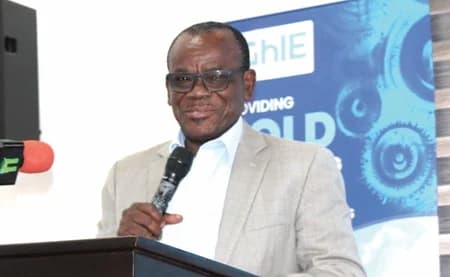
Complementing these quality assurance efforts, the Ghana Institution of Engineering (GhIE) has officially launched the 2026 Engineering Excellence Awards (EEA). During the launch ceremony at the Engineering Centre in Accra, GhIE President Ing Ludwig Annang Hesse emphasized that the awards represent a renewed commitment to innovation and professional standards. The 2026 awards will cover various categories, including Individual Excellence and Public Impact, under a transparent framework. Key speaker Ing. Isaac Bedu noted that the scheme aims to enhance the national visibility of the profession, asserting that most contemporary societal challenges are fundamentally rooted in engineering and require innovative, localized solutions.
Simultaneously, the Ghanaian government is reinforcing the bridge between academic research and national development. Speaking at the second Applied Research Conference of Accra Technical University, Chief of Staff Dr. Julius Debrah called for stronger collaboration among universities, research institutions, and industry leaders. He highlighted that while Ghana is rich in innovative ideas, the translation of research into tangible public service improvements remains a critical hurdle. Dr. Debrah urged stakeholders to ensure that AI and emerging technologies are utilized in ways that align with national development goals and respect local cultural contexts, advocating for partnerships to begin at the earliest stages of research.
These combined initiatives signal a strategic shift toward a more integrated and technology-driven professional environment in Ghana. By hosting international conventions on quality assurance and incentivizing engineering breakthroughs, the nation is positioning itself as a hub for professional capacity building. The focus across all sectors—from library services to heavy engineering—remains on practical implementation and human-centered innovation. As these events approach, participants can expect extensive networking opportunities, professional certifications, and a roadmap for integrating intelligent systems into Ghana's broader digital transformation agenda.


