••
Ghana Restructures Gold Management as MIIF Pushes for Deeper Local Mining Value Chain Integration
•3 min read•4 sources
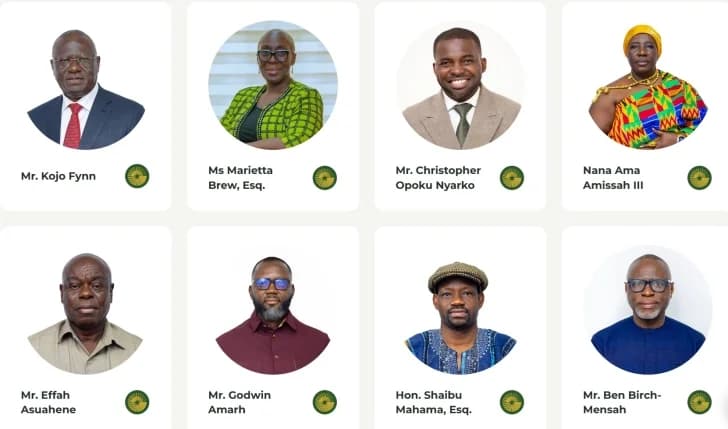
Ghana is undergoing a significant strategic shift in the management of its mineral wealth, marked by leadership transitions at the Ghana Gold Board (GoldBod) and a renewed focus on localizing the mining supply chain. The Bank of Ghana (BoG) recently confirmed that Mrs. Matilda Asante-Asiedu, the Second Deputy Governor, has replaced Dr. Johnson Asiama on the GoldBod board. This transition, effective as of May 2026, aligns with the Ghana Gold Board Act and follows recommendations from the International Monetary Fund (IMF) for the central bank to cease quasi-fiscal activities. The move comes as the operations of the Domestic Gold Purchase Programme, which previously reported significant losses, are being fully transferred to GoldBod to ensure greater transparency and fiscal discipline.
Parallel to these regulatory shifts, the Minerals Income Investment Fund (MIIF) is aggressively pursuing greater local participation in the mining value chain. MIIF CEO Justina Nelson recently led a delegation to assess the capabilities of local manufacturers like B5 Plus Limited, which has the capacity to produce 130,000 tonnes of grinding media annually. With mining companies in Ghana projected to spend approximately $95.5 million on grinding media alone in 2024, MIIF aims to ensure that a larger portion of this expenditure remains within the domestic economy. Mrs. Nelson emphasized that the fund's mandate extends beyond direct mining to supporting the entire ecosystem of suppliers and manufacturers that sustain the industry.
While the push for local content gains momentum, stakeholders are also calling for broader regional cooperation and better utilization of existing industrial assets. Nana Akwasi Awuah, former CEO of the Precious Minerals Marketing Company (PMMC), has advocated for the creation of an African Gold Producers Association (AGPA) and an African Gold Refineries Association (AGRA). He argues that continental synergy in production and marketing is essential for Africa to maximize the economic benefits of its gold resources. Such a unified strategy would strengthen Africa's position in the global market and facilitate the sharing of refining expertise across borders.
However, the path to industrial self-sufficiency faces domestic hurdles, as evidenced by the deteriorating state of the Ghana Atomic Energy Commission (GAEC) foundry. Designed to accommodate over 2,000 workers for industrial activity and training, the facility has reportedly fallen into disrepair and is currently underutilized. Dr. Andrew Nyamful of GAEC noted that the facility, now plagued by theft and neglect, represents a missed opportunity for technical training and local manufacturing. Revitalizing such assets will be crucial if Ghana is to successfully bridge the gap between mineral extraction and high-value industrial production.
Live rates
Ghana gold price →
