••
Forestry Commission secures $21.8m World Bank funding for forest project
•2 min read•1 source
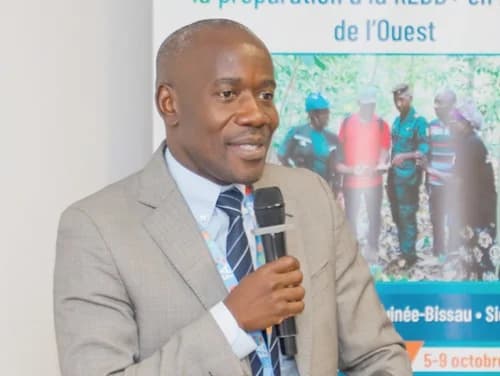
The Forestry Commission of Ghana has secured $21.8 million from the World Bank under the Ghana Cocoa Forest REDD+ Programme, marking a significant milestone in results-based climate finance. Speaking at a South-South workshop organized by the Food and Agriculture Organization (FAO) in Accra, Timothy Ataboadey Awotiirim, the Deputy Chief Executive of the Forestry Commission, presented the achievement as a benchmark for environmental conservation and financial mobilization in the sub-region. The funding is part of a broader effort to reward the country for its success in reducing emissions from deforestation and forest degradation.
Mr. Awotiirim highlighted the specific institutional and technical advancements that enabled Ghana to qualify for these funds. He noted that the country has significantly improved its systems for monitoring, reporting, and verifying forest-related emissions, which are essential requirements for accessing global climate finance. By establishing a robust framework for tracking environmental changes, Ghana has demonstrated the feasibility of results-based payments for other West African nations. The Forestry Commission emphasized that these technical capabilities are foundational to attracting international investment in forest conservation.
The FAO workshop served as a platform for sharing Ghana’s experience with other West African nations, providing a road map for improving their own climate finance readiness. Mr. Awotiirim stressed the importance of collective regional efforts and the exchange of best practices to overcome common barriers. He acknowledged that while Ghana has seen success, challenges remain in making climate finance more accessible to a wider range of countries. The goal is to build a regional coalition that can effectively manage forest resources while tapping into international financial mechanisms.
FAO Representative Meshack Oguna Malo reinforced the need for these funds to reach the grassroots level. He pointed out a persistent gap between the global availability of climate funds and the actual capacity of countries and local communities to access them. Mr. Malo emphasized that for climate interventions to be sustainable, they must directly benefit the communities that rely on forest resources for their livelihoods. The ongoing dialogue in Accra seeks to bridge this gap by refining the strategies used by African governments to secure and distribute environmental funding.
