••
Ghana Records $2.62 Billion FDI Surge as Trade Ministry Sets $12 Billion Investment Target
•2 min read•5 sources
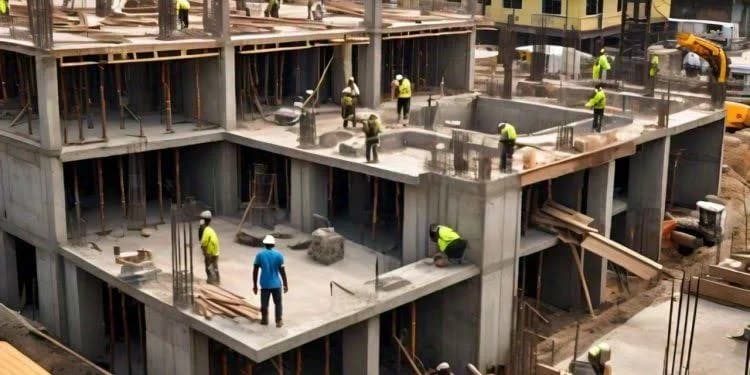
Ghana’s investment landscape has witnessed a significant rebound, with Foreign Direct Investment (FDI) inflows surging to $2.62 billion in 2025. This recovery follows a two-year decline where inflows hit a low of $649.58 million in 2023. According to the 2025 Annual Investment Report launched by the Ghana Investment Promotion Authority (GIPA), the country registered 254 new investment projects during the first year of the Mahama administration. These projects are projected to create approximately 18,748 jobs, predominantly for Ghanaian citizens, signaling a renewed confidence in the nation's economic trajectory.
Minister for Trade, Agribusiness, and Industry, Mrs. Elizabeth Ofosu-Adjare, highlighted the government's ambitious strategy to convert a nearly $12 billion investment pipeline into operational businesses. Speaking at the report’s launch in Accra, the Minister emphasized that the government is focused on diversifying the economy through sectors such as agribusiness, textiles, pharmaceuticals, and automotive manufacturing. She urged foreign investors to prioritize strategic partnerships with local businesses and utilize Ghanaian inputs to enhance domestic value chains and maximize the economic benefits of their investments.
The 2025 data reveals broad-based interest across key economic pillars, with manufacturing, energy, and technology receiving significant attention. Notably, the upstream petroleum sector saw a 20% increase in investment, reaching $870 million. Beyond capital injection, Minister Ofosu-Adjare called for a focus on skills development for the youth, asserting that translating these investments into productive capacity is essential for sustainable growth and reducing unemployment.
While investment remains strong, more recent economic indicators from 2026 suggest shifts in the construction sector. The Ghana Statistical Service (GSS) reported that building cost inflation rose to 4.0% in July 2026, up from 3.1% in June. Although this represents a second consecutive monthly increase, the rate remains significantly lower than the 14.2% recorded in July 2025. Current price pressures are largely driven by an 18.0% jump in plant and equipment expenses and a 5.1% rise in material costs, even as labor costs saw a modest decline of 3.2%.

