••
Ghana Projects Economic Resilience as FDI Hits $2.62bn Amid Debate Over Gold-Backed Stabilization Policies
•3 min read•3 sources
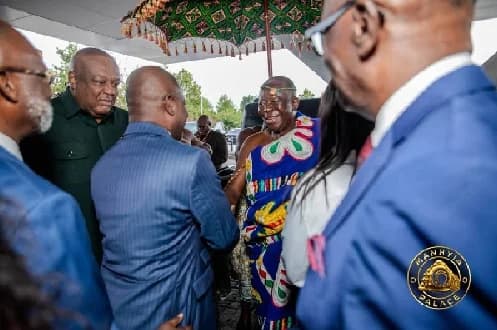
Ghana is intensifying its efforts to attract global capital, with the government reporting $2.62 billion in Foreign Direct Investment (FDI) for 2025. Representing the President John Mahama administration at the Africa Business Investment Summit (ABIS) in Washington, D.C., Deputy Minister of Trade Sampson Ahi emphasized the nation’s commitment to industrialization through the '24-Hour Economy' and 'Feed Ghana' programmes. These initiatives are designed to leverage Ghana’s strategic position as the host of the AfCFTA Secretariat, offering investors a gateway to a market of 1.3 billion people. The summit also featured insights from the Asantehene, Otumfuo Osei Tutu II, who underscored that consistent good governance remains the primary catalyst for attracting sustainable international partnerships.
While the current administration promotes new growth paths, former Vice President Dr. Mahamudu Bawumia has provided new details on the fiscal strategies that stabilized the cedi during recent economic volatility. Dr. Bawumia revealed that a strict $80 million monthly cap on foreign exchange interventions, previously imposed by the International Monetary Fund (IMF), had caused artificial currency scarcity and rapid depreciation. To circumvent these restrictions, the previous administration introduced the 'Gold-for-Oil' and 'Gold-for-Reserves' programs. These unconventional strategies successfully increased national gold reserves from 8.7 tons to over 31 tons within two years, eventually prompting the IMF to lift the intervention cap and allowing the Bank of Ghana to inject over $1 billion monthly into the forex market.
However, the success of these gold-backed policies has become a subject of intense domestic scrutiny. The Institute of Economic Research and Public Policy (IERPP) recently balanced its praise for the $2.62 billion FDI inflow with a stern warning regarding the Domestic Gold Purchase Program (DGPP). The Institute questioned the overall fiscal health of the strategy, suggesting that while the program aided currency stabilization, it may have resulted in financial losses totaling approximately $1.7 billion. This critique highlights a growing tension between the need for innovative economic management and the imperative for transparency in state-led commodity trading.
As Ghana navigates this complex economic landscape, the focus remains on maintaining the momentum of international confidence. The transition from the emergency measures described by Dr. Bawumia to the long-term industrialization goals of the Mahama government represents a pivotal moment for the nation's economy. Moving forward, the government must reconcile the high cost of past stabilization efforts with the promise of new investments in industrial parks and special economic zones to ensure that FDI gains translate into tangible job creation and sustainable growth.
Related topic
John Mahama: Latest News & Updates →Live rates
Ghana gold price →
