••
Ghana FDA Reports GH 70 Million Surplus as Authorities Intensify Food Safety Enforcement Nationwide
•3 min read•5 sources
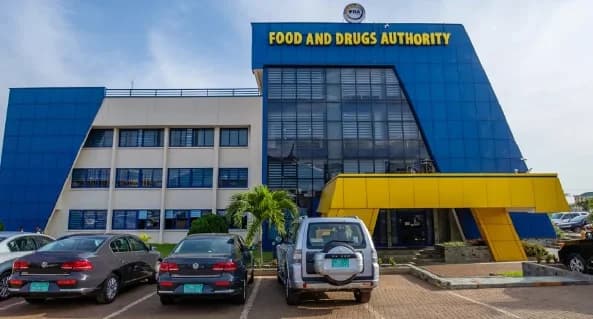
The Food and Drugs Authority (FDA) of Ghana has announced a significant financial surplus of GH 70 million for the 2025 fiscal year, representing a 51% increase over the previous year’s GH 46 million. This financial milestone comes amid a period of heightened regulatory activity and enforcement across the country, as both national and local health officials move to protect consumers from expired and hazardous products. During the FDA’s 2025 Annual Stakeholders’ Meeting, officials highlighted a surge in product applications and market surveillance efforts designed to ensure public health safety under the current administration.
In terms of operations, the FDA processed 24,446 product applications in 2025, approving 20,205. Notably, 62% of these registrations were for local products, reflecting a strategic push to support Ghanaian businesses and boost local industry. The authority’s total revenue reached GH 420 million—comprised of internally generated funds, donor support, and government subsidies—while total assets rose to GH 358 million. FDA CEO Prof. Kwabena Frimpong-Manso Opuni credited these results to ongoing reforms, including digitalization and infrastructure improvements aimed at enhancing response times and public health safety.
Despite the financial growth, the FDA faces significant hurdles, including a GH 95 million revenue shortfall attributed to currency fluctuations. Deputy Director of Finance Samuel Adom-Siaw and other officials raised concerns regarding aging laboratory equipment, which poses maintenance challenges and could impact testing efficiency. Furthermore, the authority continues to battle the influx of illicit products. To counter these threats, the FDA has intensified its market surveillance, retrieving hundreds of thousands of non-compliant items and reaching over 12 million people through robust public education campaigns.
Enforcement efforts have also scaled up at the district level to address immediate health risks. In the Tatale Sanguli District, the Environmental and Sanitation Unit, led by Nasigri Abukari, recently confiscated and destroyed a large quantity of expired beverages and food products from local shops. Similarly, health officers in Ho have issued an urgent warning to residents of Avakpeta following the illegal dumping of cartons of spoiled poultry. Environmental health official Lawrence Senya cautioned that while the chicken appeared frozen initially, it is unfit for consumption. These regional actions underscore a zero-tolerance policy toward traders who compromise safety standards.
Moving forward, the Ministry of Health and the FDA are emphasizing the need for increased public confidence and stakeholder collaboration. Chief Director of the Ministry of Health, Desmond Boateng, stressed that regulation is a collective responsibility, urging citizens to report suspicious food practices. As the FDA seeks to upgrade its facilities and replace outdated equipment, the focus remains on maintaining a balance between supporting local industry growth and enforcing strict compliance to safeguard the health of all Ghanaians.