••
Ghana’s Creative Industry Calls for Policy Continuity Amidst Rising Costs for Independent Artists
•3 min read•3 sources
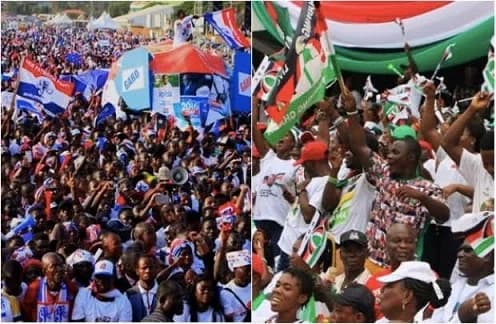
Ghana’s creative sector is at a critical juncture as industry stakeholders call for a decoupling of arts policy from the country’s four-year political cycle. Following the inauguration of President John Mahama on January 7, 2025, there is a growing consensus that the success of the creative economy depends on maintaining momentum for established initiatives. Industry experts argue that for Ghana to truly capitalize on its cultural heritage, the government must prioritize the effectiveness of creative policies over party politics, ensuring that the progress made in recent years is not lost during the transition of power.
A central pillar of this call for continuity is the preservation of high-impact programs like the 'Year of Return' and 'Beyond the Return.' These initiatives, which successfully positioned Ghana as a global cultural hub, were developed under the previous administration but are viewed by practitioners as national assets rather than partisan projects. Graphic Online highlights that the creative industry cannot afford the disruption often caused by new governments discarding successful initiatives simply because of their origins. Instead, a consistent vision is required to align government support with the practical needs of practitioners, fostering an environment where cultural significance translates into long-term economic growth.
However, the institutional challenges are mirrored by the harsh financial realities facing individual creators, particularly within the music industry. For independent Ghanaian artists, the path to success is increasingly expensive, with the cost of releasing a single song often escalating into thousands of dollars. Beyond the initial studio sessions, artists must fund professional mixing, mastering, marketing, and the production of high-quality visuals. These expenditures place a significant burden on talent, often requiring substantial upfront investment before any revenue is generated, further complicating the professional landscape for emerging creators.
The digital era has introduced additional complexities regarding artist compensation. While achieving one million streams on a digital platform remains a significant milestone that enhances an artist's visibility and global credibility, it does not necessarily result in financial wealth. The disparity between streaming numbers and actual earnings remains a hurdle for many, as the revenue generated from digital platforms is often split among various stakeholders or fails to cover the high production costs mentioned earlier. This disconnect underscores the need for a more robust support system that addresses both the macro-level policy stability and the micro-level economic survival of Ghanaian talent.
As the Mahama administration begins its term, the creative sector looks toward a future where policy stability and economic viability intersect. Ensuring that the industry is insulated from political shifts will provide the necessary foundation for artists to navigate the high costs of production and the intricacies of the digital market. Ultimately, the growth of Ghana’s creative economy will depend on a unified approach that values cultural impact and sustainable financial models over short-term political gains.
Related topic
John Mahama: Latest News & Updates →

